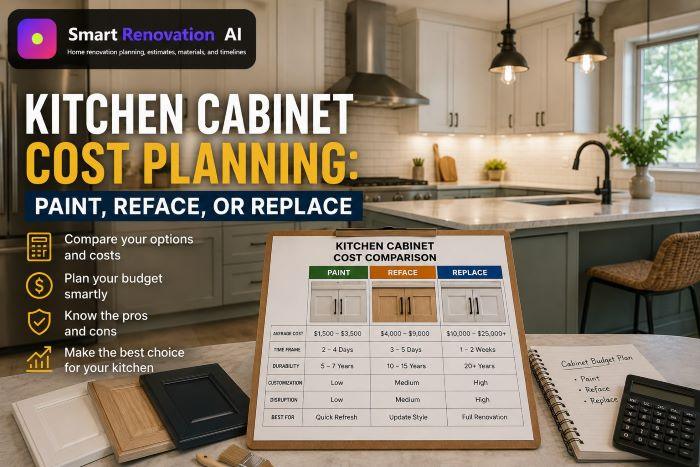
Kitchen cabinet cost planning starts with what the cabinets are expected to solve. Are they being refreshed, repaired, expanded, reorganized, or fully replaced? The answer changes the material list, labor, timeline, and connected kitchen costs.
Cabinets are expensive because they are not only boxes. They affect storage, counters, appliances, backsplash, lighting, plumbing, flooring, and the daily feel of the kitchen.
Count The Cabinet Parts
A cabinet estimate should not rely only on kitchen size. Count the cabinet runs and pieces: base cabinets, wall cabinets, tall pantry cabinets, doors, drawer fronts, drawer boxes, end panels, fillers, toe kicks, crown, island panels, and accessories.
| Cabinet item | Why it affects cost |
|---|---|
| Base cabinets | Carry counters and often include drawers, sink base, or appliance openings. |
| Wall cabinets | Affect height, crown, lighting, and backsplash relationships. |
| Tall cabinets | Pantry, oven, broom, or utility cabinets usually cost more per unit. |
| Drawer stacks | Slides, boxes, hardware, and labor add cost. |
| Panels and fillers | Make the installation look finished but are often forgotten. |
| Accessories | Pull-outs, organizers, lazy Susans, tray dividers, and trash systems add convenience and cost. |
Four Cabinet Budget Paths
Repaint
Best when cabinets are solid and the layout works.
Reface
Best when boxes are good but doors and drawer fronts need a new look.
Replace
Best when the layout, boxes, storage, or damage makes old cabinets a poor base.
Customize
Best when storage, style, size, or finish needs are specific.
Box Condition Comes Before Door Style
Cabinet boxes should be checked for water damage, swelling, loose mounting, broken shelves, failed drawer tracks, poor alignment, and old modifications. If boxes are failing, repainting doors does not fix the core problem. If boxes are strong, replacement may not be necessary.
For the repaint-versus-replace decision, review cabinet repaint vs replacement before choosing products.
Hardware And Door Details
Cabinet hardware can look small but affect budget. New pulls may require drilling. Different pull spacing may require filling old holes. Hinges may need replacement or adjustment. Soft-close slides, concealed hinges, and specialty hardware add product and labor.
Door style also matters. Flat slab doors, shaker doors, raised panels, glass doors, and custom profiles have different material and finish costs. A cabinet quote should identify door style and finish, not just “new doors.”
Cabinets Connect To Counters And Appliances
Changing cabinets can force counter replacement. Changing cabinet height can affect backsplash. Changing appliance openings can affect electrical, plumbing, and ventilation. Adding an island can affect circulation, flooring, lighting, and outlet requirements.
Supplier Categories
Cabinet projects may involve cabinet showrooms, carpenters, cabinet painters, refacing companies, hardware suppliers, countertop fabricators, appliance installers, electricians, plumbers, and general contractors. Supplier recommendations should match the chosen path.
Photos And Measurements
- Full kitchen from multiple angles.
- Each cabinet run.
- Inside sink cabinet and damaged areas.
- Drawer and hinge close-ups.
- Appliance openings.
- Island and end panels.
- Door and drawer count.
Make A Simple Cabinet Sketch
A cabinet sketch does not need architectural precision. Draw each wall as a line and mark sink, range, refrigerator, dishwasher, windows, doors, pantry, island, and cabinet runs. Add rough widths where possible. This helps contractors understand whether the question is about repainting, refacing, replacement, or layout redesign.
For replacement, the sketch also helps identify fillers, end panels, appliance clearances, corners, and tall cabinet locations. These small pieces are easy to miss in a photo-only estimate.
Cost Control Choices
- Reuse existing layout when it works.
- Keep strong cabinet boxes and change doors or finish.
- Choose standard sizes where possible.
- Limit specialty accessories to the storage problems that matter most.
- Confirm appliance dimensions before ordering cabinets.
- Decide hardware early so drilling and finish work are planned.
Installation Details To Confirm
Ask whether installation includes leveling, scribing, fillers, toe kicks, panels, crown, hardware drilling, appliance panels, and final adjustments. These details affect how finished the kitchen feels, and they should not be left to assumption.
Cabinet Cost Mistakes
One common mistake is pricing cabinets without the connected work. If cabinets change, counters may change. If counters change, sink and faucet may change. If the island changes, lighting and outlets may change. Another mistake is choosing doors and hardware before confirming the box condition.
Cabinet planning should also include delivery and storage. Large cabinet orders need a safe, dry place before installation. If cabinets are delivered too early, they can be damaged. If they arrive late, counters and backsplash may be delayed.
How To Keep Cabinet Quotes Comparable
Send the same cabinet count, photos, sketch, preferred path, and exclusions to every contractor. Ask each quote to separate boxes, doors, drawer fronts, hardware, panels, trim, installation, modifications, disposal, and touch-ups. This prevents one quote from including only cabinets while another includes a finished kitchen cabinet installation.
For islands, mark seating sides, outlet needs, overhang, and walkway clearance before comparing prices.
These details affect cabinet layout, counter size, and electrical planning.
They should be decided before ordering, not during installation.
Late decisions are one of the easiest ways for cabinet budgets to drift.
Decide the cabinet path before shopping finishes.
That order prevents expensive mismatches.
FAQs
What affects kitchen cabinet cost?
Cabinet count, layout, box type, door style, finish, hardware, accessories, installation, modifications, and whether cabinets are repainted, refaced, or replaced affect cost.
Are custom cabinets always necessary?
No. Stock, semi-custom, repainting, or refacing may work if the layout and storage needs are reasonable.
How do I estimate cabinet quantity?
Count base cabinets, wall cabinets, tall cabinets, doors, drawers, panels, fillers, island cabinets, and special storage units.
Should cabinet hardware be included?
Yes. Knobs, pulls, hinges, slides, soft-close upgrades, and drilling should be listed clearly.
What photos help estimate cabinet cost?
Show the full kitchen, each cabinet run, interiors, doors, drawers, hardware, damage, island, end panels, and appliance openings.