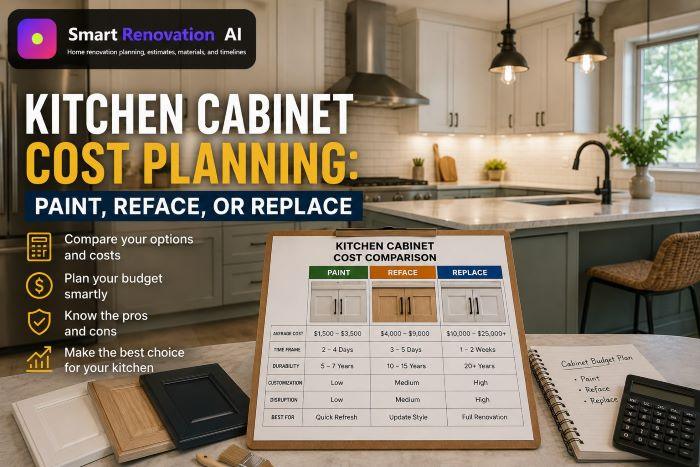

A kitchen remodeling budget should begin with how the kitchen works today, not with cabinet colors or countertop samples. The layout, appliance positions, cabinet condition, plumbing wall, lighting, flooring transitions, and hidden repair risks decide how far the money will go.
Many kitchen estimates become confusing because cosmetic upgrades and construction changes are mixed together. Repainting existing cabinets is a different project from replacing cabinets. Replacing a countertop is different from moving the sink. Adding under-cabinet lighting is different from rewiring the room. A useful budget separates these choices before a contractor quote is requested.
Map The Kitchen By Work Zone
A kitchen is easier to estimate when it is broken into zones. Each zone has its own materials, labor, and risk. This keeps a simple refresh from turning into a full remodel on paper.
| Kitchen zone | Budget items to identify | What can change the price |
|---|---|---|
| Cabinets | Repaint, reface, repair, replace doors, replace boxes, add hardware | Damaged boxes, custom sizes, tall pantry units, soft-close hardware, crown trim |
| Countertops | Laminate, butcher block, solid surface, quartz, stone, edge profile, cutouts | Sink cutout, waterfall edge, seams, slab waste, wall unevenness |
| Backsplash | Tile, grout, trim, wall prep, outlets, waterproofing near sink | Small tile, patterned tile, uneven drywall, outlet relocation |
| Flooring | Patch, replace, refinish, transition strips, subfloor check | Cabinet footprint changes, old adhesive, floor leveling, open-plan transitions |
| Lighting | Ceiling fixtures, recessed lights, under-cabinet lights, switches | Access to wiring, panel capacity, patching after electrical work |
| Plumbing | Sink, faucet, disposal, dishwasher, supply lines, drain connections | Moving the sink, old valves, leaking drain lines, water shutoff access |
| Appliances | Delivery, installation, trim kits, venting, gas or electrical needs | Different appliance sizes, range hood ducting, dedicated circuits |
Refresh, Partial Remodel, Or Full Kitchen Remodel?
The budget changes sharply depending on how much of the original kitchen stays in place.
Refresh
Best for kitchens with a working layout and sound cabinets. Typical work may include cabinet paint, hardware, backsplash, faucet, lighting, wall paint, and small repairs.
Partial remodel
Useful when some elements are worn but the room does not need a new footprint. This may include countertop replacement, selected cabinet upgrades, flooring, and lighting improvements.
Full remodel
Appropriate when layout, storage, surfaces, appliances, and systems need coordinated work. This can involve demolition, rough electrical, plumbing, cabinets, counters, tile, flooring, trim, and painting.
Repair-first project
Needed when leaks, soft flooring, poor ventilation, damaged drywall, unsafe wiring, or cabinet failure must be solved before cosmetic work makes sense.
Where Kitchen Budgets Usually Drift
Kitchen budgets rarely drift because of one single line item. They usually drift because several small decisions are left undefined. A countertop allowance without edge detail, a cabinet allowance without hardware, or a backsplash allowance without tile size can all create later changes.
- Cabinet decisions: repainting, refacing, or replacement should be chosen early because it controls the countertop and backsplash schedule.
- Appliance dimensions: new appliances can force cabinet fillers, panel changes, venting changes, or electrical adjustments.
- Countertop cutouts: sink, faucet, cooktop, and outlet details can affect fabrication and installation.
- Flooring transitions: open kitchens need clean transitions into living rooms, dining rooms, hallways, or exterior doors.
- Wall condition: old backsplash removal can damage drywall and add preparation before new tile.
Example: A Budget-Friendly Kitchen Update
A homeowner wants a brighter kitchen but does not want to move plumbing or replace every cabinet. A focused budget might include cabinet cleaning and repainting, new pulls, a simple backsplash, countertop replacement, faucet upgrade, two lighting improvements, and wall paint. The work stays controlled because the sink wall, appliance locations, and flooring footprint stay the same.
That is different from a full kitchen remodel where cabinets are removed, the island changes size, flooring runs under new cabinet lines, the sink moves, and electrical work supports new lighting and appliances. Both are legitimate projects, but they should never be estimated with the same calculator assumptions.
Material Allowances To Confirm
| Allowance | Why to confirm it | Helpful detail |
|---|---|---|
| Cabinet finish | Paint grade, door condition, prep, and hardware affect labor | Ask if degreasing, sanding, primer, and spray or brush finish are included. |
| Countertop | Price depends on material, thickness, edge, cutouts, and seams | Get the allowance per square foot or per slab and ask what fabrication includes. |
| Backsplash | Tile size and layout influence installation time | Confirm trim pieces, grout type, outlet cuts, and wall repair. |
| Lighting | Fixtures may be simple swaps or require new wiring | Ask whether patching and repainting after electrical work are included. |
| Flooring | Cabinet changes can expose unfinished floor areas | Check whether leveling, underlayment, and transitions are included. |
Questions To Ask Before Hiring A Kitchen Contractor
- Will the cabinet layout stay the same?
- Are cabinets being painted, refaced, repaired, or replaced?
- Who is responsible for measuring countertops?
- Will appliance sizes change?
- Does the quote include backsplash wall repair?
- Are plumbing and electrical permits required for this scope?
- What is the expected downtime for sink, stove, refrigerator, and dishwasher?
Kitchen Decisions That Should Be Made Before Pricing
Some kitchen choices can be left until later, but several should be decided early because they affect measuring, labor, and sequencing. Cabinet layout, countertop material, sink type, faucet holes, appliance sizes, backsplash height, and flooring direction can all change the estimate. A contractor can give a rough range without those details, but a final quote should not stay vague.
| Decision | Budget effect | Best time to decide |
|---|---|---|
| Keep or change cabinet layout | Controls demolition, flooring footprint, countertop measurement, and electrical planning. | Before requesting final quotes. |
| Sink and faucet style | Affects countertop cutouts, plumbing connections, disposal, and accessories. | Before countertop templating. |
| Backsplash height | Changes tile quantity, trim, outlet cuts, and installation time. | Before tile material is ordered. |
| Range hood or microwave venting | Can require ducting, cabinet adjustment, wall patching, or electrical work. | Before cabinets are finalized. |
| Flooring under cabinets | Determines whether old footprints can remain visible after layout changes. | Before demolition begins. |
Homeowners who want a controlled budget should write these choices next to the quote. If a choice is not final, it should be labeled as an allowance rather than treated as a fixed price. That small difference makes the budget more honest.
Small Kitchen Details That Affect Labor
Kitchen labor is shaped by details that are easy to miss during early planning. A heavy sink may require cabinet reinforcement. A tall backsplash can add more outlet cuts and trim. A panel-ready appliance may need exact cabinet coordination. A deep refrigerator can affect walkway clearance. Even hardware changes can take time if old holes need filling and new holes must be drilled accurately.
These details are not reasons to avoid the project. They are reasons to document the project clearly. If the homeowner wants a simple cabinet repaint, the quote should mention cleaning, sanding, primer, finish coats, door removal, curing time, and hardware handling. If the homeowner wants new cabinets, the quote should discuss measurement, delivery, assembly, installation, fillers, trim, toe kicks, and final adjustment.
A kitchen budget becomes stronger when it treats labor as skilled coordination rather than a single line at the end. That helps the homeowner understand why one bid may be higher because it includes the work that makes the kitchen fit and function.
Before comparing quotes, it helps to build a neutral planning report with photos and a written request. Smart Renovation AI can generate a kitchen scope, material list, timeline, and supplier categories from the main renovation planner.
FAQs
What is usually the biggest cost in a kitchen remodel?
Cabinet work is often the largest cost because it can involve doors, boxes, hardware, layout changes, finishing, installation, and sometimes electrical or plumbing coordination.
Can a kitchen remodel stay low cost?
Yes, when the layout remains in place, cabinets are repaired or repainted instead of replaced, appliances stay in the same positions, and the project avoids moving plumbing or walls.
What should a kitchen remodeling quote include?
A quote should include demolition, protection, cabinets, counters, backsplash, flooring transitions, plumbing connections, electrical or lighting work, appliance fit, cleanup, and exclusions.
Should appliances be included in the kitchen budget?
Yes, even if bought separately. Appliance size, electrical needs, venting, delivery, and installation can affect cabinets, counters, and schedule.
What photos help estimate a kitchen remodel?
Use wide photos of each wall, close-ups of cabinets and countertops, the sink wall, appliance areas, flooring transitions, ceiling lighting, and any damage or uneven surfaces.