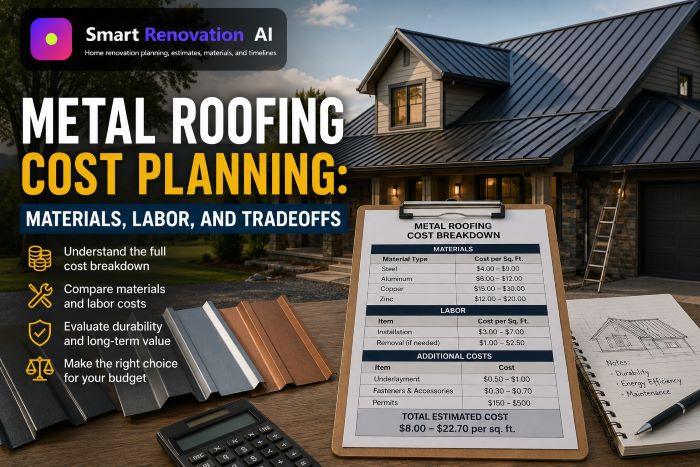
Metal roofing cost planning is about the system, not only the panel. Panel profile, trim, flashing, fasteners, underlayment, ventilation, roof shape, pitch, tear-off, and labor all affect the estimate.
A metal roof quote should be specific because different systems can look similar in a short description while performing and costing differently.
Metal Roof System Choices
| System | Planning notes |
|---|---|
| Standing seam | Concealed fasteners, cleaner lines, more detailing, often higher labor. |
| Exposed-fastener panels | Different fastener maintenance and panel profile considerations. |
| Metal shingles or tiles | Different appearance, accessory pieces, and installation method. |
| Accent metal roof | Porch, awning, dormer, or small section may need special trim matching. |
Trim And Flashing Can Drive Detail Cost
Metal roofing has many detail pieces: ridge cap, gable trim, eave trim, valley flashing, sidewall flashing, endwall flashing, vent boots, drip edge, closures, and fasteners. A quote that says “metal panels installed” without trim detail may be incomplete.
Underlayment And Condensation
Underlayment matters under metal roofing. Ventilation and condensation control should be discussed, especially when converting from another roof material. The contractor should explain how the roof assembly handles moisture, heat, and airflow.
Tear-Off Or Install Over?
Some projects discuss installing metal over existing shingles, but that decision should not be automatic. Deck condition, old roof layers, trapped moisture, uneven surfaces, fastener holding, ventilation, code, and warranty all matter. A tear-off may cost more upfront but reveal problems before a new system is installed.
Quote Lines To Confirm
- Panel type, gauge, coating, and color.
- Underlayment type.
- Trim and flashing pieces.
- Fasteners or clips.
- Ventilation details.
- Tear-off and disposal.
- Decking replacement policy.
- Labor and warranty.
Roof Shape And Access
Simple roof planes are easier than roofs with many valleys, dormers, skylights, chimneys, penetrations, and transitions. Metal detailing around those areas takes skill and time. Steeper roofs and difficult access can also raise labor and safety requirements.
When Metal Roofing Makes Sense
Metal roofing can be attractive when durability, appearance, roof slope, and long-term performance fit the home. It may not be the best choice if the quote is vague, the installer lacks system experience, or important ventilation and trim details are not addressed.
Panel Layout And Oil Canning
Metal panels can show waviness, especially on wider flat surfaces. This is often discussed as oil canning. It may be cosmetic rather than structural, but it affects expectations. Panel width, substrate flatness, fastening, color, finish, and lighting can influence how visible it is. A detailed quote should identify panel profile and installation method so the homeowner knows what appearance to expect.
Accessory Pieces Are Not Minor Extras
Metal roof accessories can become a major part of labor. Ridge caps, closures, sidewall flashing, endwall flashing, valley pieces, snow guards where suitable, pipe boots, sealants, trim screws, clips, and transitions need careful installation. This is why a metal roof estimate should not be judged by panel price alone.
Questions For A Metal Roofing Contractor
- Which panel profile and gauge are included?
- Are fasteners exposed or concealed?
- How are valleys, penetrations, and wall transitions handled?
- What underlayment is being used under the metal?
- Will old roofing be removed or covered?
- How is ventilation checked before installation?
- What maintenance does the system require?
- What workmanship warranty is included?
Budget Comparison
A metal roof may cost more upfront than basic asphalt shingles, but the comparison should include expected service life, maintenance, roof complexity, climate exposure, and whether the installer is experienced with the chosen system. A low metal quote from an installer who does not describe flashing, trim, or fastening clearly can be riskier than a higher quote with better detail.
Where Metal Roof Estimates Become Confusing
One quote may include tear-off, synthetic underlayment, new trim, flashing replacement, ventilation review, and a strong workmanship warranty. Another may list only panels and labor. The second number may look better until the missing items are added. Ask each contractor to separate panels, accessories, labor, tear-off, disposal, decking allowance, and warranty terms.
Color and coating are also part of the decision. Dark colors, reflective finishes, coastal exposure, heavy tree cover, and snow or rain patterns can affect what product makes sense. The estimate should not treat all metal roofing as one generic material.
Retrofit And Small-Area Metal Roofs
Metal is sometimes used on porches, bay windows, dormers, awnings, and accent roof sections. Small areas can still be expensive per square foot because trim, flashing, setup, and transitions remain detailed. When comparing costs, separate full-roof metal installation from accent metal roofing.
Photos That Help A Metal Roof Estimate
Ground photos should show roof edges, roof-to-wall transitions, valleys, penetrations, gutters, current material, and any area where water collects or stains appear. If the project includes an accent section, include close photos of the adjoining siding, trim, and main roof material so the transition can be understood.
Ask whether the installer has completed the same panel system before. Metal roofing rewards careful layout and detailing, and the best quote usually explains the installation approach in plain language instead of relying on brand names alone.
If the project involves both metal and another roof material, confirm how the two systems meet. Transitions between materials need careful water control, matching trim, and a clean visual plan.
FAQs
What affects metal roofing cost?
Panel type, roof size, pitch, trim, flashing, underlayment, fasteners, tear-off, labor, access, ventilation, and warranty affect cost.
Is standing seam more expensive than exposed-fastener metal roofing?
Often yes because standing seam systems use different panels, clips, detailing, and installation methods.
Can metal roofing go over old shingles?
Sometimes it is discussed, but deck condition, local rules, ventilation, weight, and warranty requirements should be checked.
What details are important in metal roof quotes?
Panel gauge, coating, trim, flashing, fastener type, underlayment, ventilation, snow or rain details, and warranty should be clear.
What photos help plan metal roofing?
Show the roof from all sides, pitch, edges, valleys, chimneys, vents, gutters, attic signs, and access areas from safe ground level.