
Kitchen renovation cost factors are not just cabinet price and countertop choice. The final number depends on how much of the kitchen changes, what is hidden behind the existing finishes, and how many trades must coordinate in a small space.
This guide is about the forces that move a kitchen estimate up or down before a quote is finalized.
Factor 1: Layout Pressure
A kitchen with the same sink, appliance, and cabinet locations is usually easier to plan than a kitchen that moves everything. Layout pressure increases when the homeowner wants a larger island, better appliance triangle, removed wall, new pantry, or different sink location.
Layout changes can touch plumbing, electrical, ventilation, flooring, drywall, cabinets, counters, and permits. That is why a layout decision should be treated as a cost factor, not only a design preference.
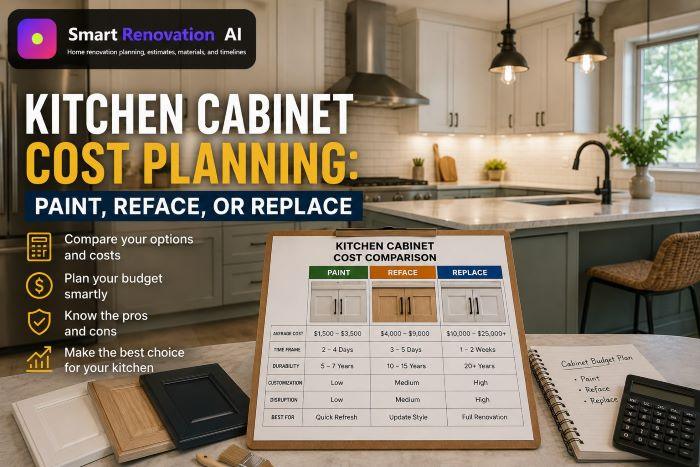
Factor 2: Cabinet Strategy
| Cabinet path | Cost behavior | Best fit |
|---|---|---|
| Repaint | Lower material change, high prep importance. | Sound boxes and acceptable layout. |
| Reface | Middle path with new doors or fronts. | Good boxes, dated visible style. |
| Replace | Higher scope, may affect counters and utilities. | Poor layout, damaged boxes, storage redesign. |
| Custom | Higher planning, fabrication, and lead time. | Specific storage, finish, or layout requirements. |
Factor 3: Counter And Backsplash Relationship
Counters and backsplash often move together. Replacing counters can damage backsplash. Replacing backsplash may reveal wall repair. A heavier counter material may require cabinet support checks. A new sink cutout can affect plumbing. These connections should be visible in the estimate.
Factor 4: Appliance Fit
Appliances influence cabinet openings, electrical loads, gas or water connections, ventilation, flooring, and delivery access. A simple refrigerator replacement may become a cabinet modification if the new unit is taller or deeper. A range hood may require ducting. A dishwasher may need plumbing and electrical checks.
Factor 5: Hidden Conditions
Kitchens often hide damage below sinks, behind dishwashers, near refrigerator water lines, around exterior walls, and under old flooring. Hidden damage is not always visible until cabinets, appliances, or flooring are removed. The quote should say how discoveries will be handled.
Factor 6: Finish Grade
Finish grade changes cost without changing the room size. Basic cabinet hardware, mid-range hardware, and premium hardware all install in similar places but cost different amounts. The same applies to counters, tile, faucets, sinks, lighting, flooring, and paint.
Choose a budget direction before shopping. The renovation budget tiers guide helps separate budget, balanced, and luxury decisions.
Factor 7: Timeline And Sequencing
Kitchens require order. Cabinets affect counters. Counters affect backsplash. Plumbing may wait for sink placement. Electrical may happen before walls close. Flooring may need to happen before or after cabinets depending on scope. Delays in one line can delay the rest.
How To Control Cost Without Weakening The Project
- Keep plumbing and appliance locations where practical.
- Reuse or repaint solid cabinets when the layout works.
- Price optional upgrades separately.
- Confirm counter, backsplash, and sink connections together.
- Inspect water-damage areas early.
- Choose materials before demolition where possible.
- Use a written scope for every contractor quote.
Inspection Points Before Setting A Budget
Open the sink cabinet, look behind or beside appliances if safe, check flooring transitions, note outlet locations, and photograph ceiling lights. These areas often reveal why one kitchen costs more than another. A room with solid cabinets and no leaks is a different project from a room with swollen cabinet bases and outdated electrical.
Ask whether the contractor expects code-related electrical changes, venting updates, or plumbing shutoff replacement. These items may not be glamorous, but they can make the renovation safer and more durable.
Cost Control That Still Feels Like A Renovation
Cost control does not mean doing nothing. It can mean keeping the sink location, repainting good cabinets, choosing a simpler backsplash pattern, using durable mid-range counters, keeping appliances in place, and investing in better lighting. These choices still change the kitchen without turning every surface into a premium upgrade.
If the homeowner wants one standout feature, choose it intentionally. A good countertop or backsplash can carry the room when the rest of the scope is practical.
Questions That Reveal The Real Cost Factor
- Is the kitchen being changed because it looks dated or because it works badly?
- Are cabinets damaged or only cosmetically tired?
- Will appliances stay in the same locations?
- Are electrical outlets and lighting adequate for the new plan?
- Will flooring be patched, replaced, or left untouched?
- Is the backsplash decorative, protective, or part of wall repair?
The answers usually reveal whether the budget is driven by finishes, layout, utilities, or repair. That is more useful than comparing average kitchen costs without context.
Once the dominant factor is known, the homeowner can cut cost in the right place instead of weakening the whole project.
That keeps savings intentional rather than random.
Intentional savings are easier to defend when contractor suggestions arrive.
That is how a kitchen plan stays practical without feeling stripped down.
The best savings still protect function.
FAQs
What factors affect kitchen renovation cost most?
Layout changes, cabinets, countertops, appliances, plumbing, electrical, flooring, hidden damage, finish grade, and labor complexity affect cost.
Why do kitchen renovation quotes vary?
Quotes vary because contractors may include different scopes, material grades, utility work, prep, disposal, and warranty.
Does kitchen size always decide the cost?
Kitchen size matters, but layout complexity, product choices, hidden conditions, and utility changes can matter just as much.
What hidden issues affect kitchen renovation cost?
Water damage, old wiring, poor ventilation, uneven floors, damaged walls, and appliance fit issues can change the estimate.
How can I reduce kitchen renovation cost?
Keep the layout where possible, reuse solid cabinets when practical, choose realistic materials, and separate optional upgrades from required work.