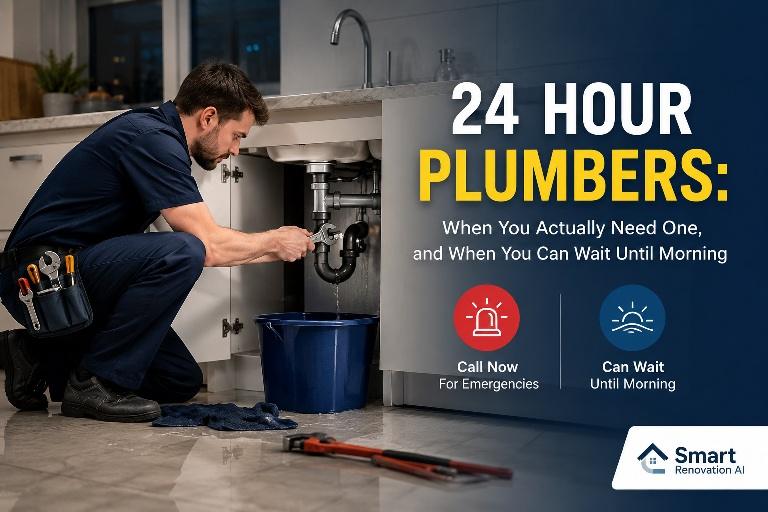
24 Hour Plumbers: When You Actually Need One, and When You Can Wait Until Morning
A burst pipe doesn’t check the clock before it decides to ruin your evening. Here’s how emergency plumbing really works — what it costs, how fast help should arrive, and how to tell a genuine emergency from a problem that can survive one more night.
In this guide
- What actually counts as a plumbing emergency
- What a 24 hour plumber does when they show up
- Best plumbers vs. emergency plumbers — not always the same call
- When a business needs a commercial plumber instead
- What 24 hour plumbing actually costs
- How to vet an emergency plumber in five minutes
- What to do while you’re waiting for them to arrive
- How to find the best plumbers near you before you need one
- Frequently asked questions
It’s almost always the same story. Everything is fine until it isn’t — a joint under the kitchen sink lets go at 11 p.m., a water heater starts leaking into the garage on a Sunday, or a toilet supply line splits while you’re at work and nobody’s home to stop it. In moments like that, the search isn’t for “a good plumber for next Tuesday.” It’s for someone who can pick up the phone right now.
That’s the entire reason 24 hour plumbers exist as a category. They’re not simply plumbers who happen to be awake late — they’re set up with on-call rotations, stocked service vehicles, and pricing structures built around one thing: showing up outside normal business hours without making you wait until Monday.
This guide walks through how to tell a real emergency from a problem that can wait, what a fair after-hours call-out actually costs, how commercial properties should approach it differently from a single-family home, and how to avoid handing your credit card to the wrong company while you’re standing in an inch of water.
What Actually Counts as a Plumbing Emergency
Not every dripping tap deserves a 2 a.m. phone call — and not every emergency plumber will be honest about that, because a panicked customer is a profitable customer. Before you dial anyone, it helps to know which side of the line your problem sits on.
A burst or actively spraying pipe, a water heater leaking near electrical panels or outlets, sewage backing up into a tub or floor drain, no water at all in a home with a private well pump failure, or any leak you cannot stop by closing the nearest shutoff valve. These situations get worse by the minute and can cause structural or electrical damage well beyond the original plumbing fault.
A single slow drain, a running toilet, a dripping faucet, low water pressure in one fixture, or a water heater that’s simply not heating. These are genuinely annoying, but shutting off the fixture or the appliance usually buys you until normal business hours, often at a lower daytime labor rate instead of an emergency one.
If you’re not sure which category you’re in, a useful gut check is this: can the problem be contained by turning a valve, and is water actively touching anything it shouldn’t (flooring, drywall, electrical, insulation, a ceiling below)? If yes to the second part, that’s an emergency. For a broader breakdown of what different leak scenarios typically cost to fix, the plumbing leak repair cost guide is a useful companion read once the immediate danger is under control.
What a 24 Hour Plumber Actually Does When They Show Up
The job on an emergency call looks different from a scheduled appointment. A daytime visit is usually diagnose-then-fix, on the plumber’s terms and timeline. An after-hours visit is triage first — stop the damage, stabilize the situation, then decide whether a full repair happens tonight or gets scheduled properly once things have calmed down.
- Emergency shutoff and containment — isolating the leak at the nearest valve so water damage stops spreading.
- Burst pipe and fitting repair — cutting out and replacing the failed section of pipe, often under time pressure with parts carried on the truck.
- Water heater emergencies — shutting down a leaking or overheating unit safely, particularly gas units where a fuel line is involved.
- Sewer and drain backups — clearing main line blockages that are affecting multiple fixtures at once, not just one drain.
- Sump pump failures — critical during storms, since a failed pump can flood a basement within hours.
- Frozen pipe response — thawing and repairing split pipes after a freeze, a common winter call-out.
If the leak has already reached drywall, flooring, or a ceiling below, the plumbing repair is only step one. Water-damaged ceilings and walls often need their own follow-up work, and it’s worth reading through what that typically involves in the ceiling water damage repair guide before assuming the plumber’s invoice is the only bill you’ll see.
Best Plumbers vs. Emergency Plumbers: Not Always the Same Call
Here’s something worth knowing before you’re mid-crisis: the best plumbers for a kitchen remodel or a whole-house repipe are not automatically the best choice for a 1 a.m. emergency, and vice versa. They’re often different service models entirely.
Best-rated general plumbers
Strong for planned work — fixture installs, repiping, remodels, water heater upgrades. Usually booked days or weeks out, priced competitively because there’s no urgency premium, and often the same technician handles the job start to finish.
24 hour emergency plumbers
Built for speed, not necessarily for the lowest price. Dispatch is prioritized, response windows are short, and pricing reflects being pulled out of bed or off a weekend. Ideal for stopping active damage, not for cosmetic or planned upgrades.
A smart approach many homeowners use: call the emergency plumber to stop the bleeding tonight, then get a second opinion or a comparison quote from a highly-rated general plumber for any larger follow-up repair once the crisis has passed. That second quote is often where the real savings happen — and it’s exactly the kind of comparison the guide to comparing contractor quotes is built to help with.
When a Business Needs a Commercial Plumber Instead
Residential and commercial plumbing look similar on the surface — pipes, valves, water — but the systems behind a restaurant kitchen, a medical clinic, or a multi-unit apartment building are a different animal. This is where calling a commercial plumber specifically, rather than a general residential emergency plumber, actually matters.
- Grease trap failures and kitchen drain backups that affect food-safety compliance
- Backflow preventer testing and repair, often legally required for commercial water systems
- Larger-diameter supply and waste lines that need different tools and certifications
- Multi-tenant properties where one failure can affect several units or floors at once
- After-hours work that has to comply with building codes and insurance requirements a residential plumber may not carry coverage for
Property managers and business owners are usually better served keeping a commercial plumbing contact on file year-round rather than searching cold during an active flood. If HVAC or ventilation issues are also part of the building’s ongoing maintenance load, it’s worth reviewing them together — the HVAC repair versus replacement cost guide covers a similar decision framework that applies well to commercial mechanical systems.
What 24 Hour Plumbing Actually Costs
Emergency pricing has a reputation for being unpredictable, but the structure is usually more consistent than people expect. Most 24 hour plumbers charge a standard labor rate plus an after-hours or dispatch premium, rather than inventing a totally different price list at midnight.
| Situation | Typical daytime range | Typical after-hours range |
|---|---|---|
| Standard leak or fitting repair | $150 – $450 | $250 – $700+ |
| Burst pipe replacement (short section) | $300 – $900 | $450 – $1,400 |
| Drain or sewer line clearing | $150 – $500 | $250 – $800 |
| Water heater emergency shutoff/repair | $200 – $700 | $350 – $1,100 |
Ranges are general planning estimates, not fixed quotes. Actual pricing depends on region, pipe access, material grade, and the extent of damage already present.
Because emergency costs shift so much based on the specific damage and access involved, it’s worth running the actual numbers for your situation rather than guessing. A quick pass through a home repair cost estimator before you’re mid-emergency can give you a realistic price range to compare an incoming quote against, so you can tell in seconds whether a number feels fair or inflated.
How to Vet an Emergency Plumber in Five Minutes
Emergencies are exactly when corners get cut — both by homeowners in a rush and by companies who know it. A few quick questions on the phone, before anyone drives to your house, filter out most of the bad options.
- Ask for the dispatch fee and hourly rate upfront. A legitimate 24 hour plumber will state both clearly, not dodge the question until they’re standing in your kitchen.
- Confirm licensing and insurance. Especially for anything involving a water heater, gas line, or wall-opening repair, this isn’t optional.
- Ask what’s included in the call-out fee. Some companies apply it toward the repair cost; others charge it purely to show up, separate from labor.
- Get a rough time-of-arrival window. “Someone will call you back” is a red flag during an active leak.
- Request the estimate before work starts, not after. A trustworthy plumber can give a range on the phone and a firmer number once they’ve seen the problem.
These same questions matter beyond the emergency call itself. For any larger follow-up repair, running through a proper contractor quote checklist before signing off protects you from scope creep and vague pricing once the immediate panic has faded.
What to Do While You’re Waiting for the Plumber to Arrive
The ten minutes between hanging up the phone and the plumber’s van pulling up can meaningfully change how much damage you end up with. None of this requires tools you don’t already own.
- Shut off water at the nearest fixture valve, or the main shutoff if the leak’s source isn’t obvious
- Turn off electricity to any area where water is near outlets, switches, or a panel
- Move furniture, rugs, and valuables away from spreading water
- Put down towels or a bucket to slow damage to flooring, not to stop the leak entirely
- Take a few photos before cleanup, useful for insurance and for comparing the plumber’s assessment later
- If there’s any smell of sewage or standing water near outlets, keep kids and pets out of that room entirely
If the leak has been running for a while before it was noticed, standing water can also seep toward foundations or exterior drainage paths. It’s worth a quick check of nearby grading and drainage once the immediate leak is handled — the outdoor drainage repair guide is a useful next stop if water pooled anywhere near an exterior wall.
How to Find the Best Plumbers Near You Before You Need One
The single biggest mistake people make with emergency plumbing isn’t picking the wrong company — it’s not having anyone lined up before the emergency happens. Searching “24 hour plumbers near me” for the first time while water is actively spreading across your kitchen floor is a stressful way to make a decision.
A better approach: spend fifteen minutes now, while nothing is actively going wrong, saving contact details for two or three licensed, insured emergency plumbers in your area. Check reviews specifically mentioning after-hours response, not just general service quality. If you’re not sure where to start looking, a nearby supplier and service search guide can point you toward the right local categories to search, whether that’s for materials, repair services, or licensed contractors in your city.
It’s also worth having a rough sense of your home’s shutoff valve locations before anything goes wrong — the main valve, plus the individual valves under sinks, behind toilets, and at the water heater. Knowing where they are ahead of time is free insurance against a much bigger repair bill later.
Not sure if a repair is emergency-level or something that can wait?
Describe the issue, add a photo if you have one, and get a realistic cost range, likely repair scope, and next steps before you call anyone — so you walk into that phone call already knowing what a fair quote looks like.
Estimate the repair now →Frequently Asked Questions
How much more do 24 hour plumbers charge compared to daytime rates?
Most add an after-hours or dispatch fee on top of standard labor, commonly 50% to 100% more for nights, weekends, and holidays. The repair itself typically costs the same — the premium pays for immediate response, not different quality of work.
Is a slow drain a real plumbing emergency?
Usually not. A single slow drain can typically wait for a normal appointment. It becomes urgent if every drain backs up at once, sewage odor appears, or water starts pooling on the floor — those signs point to a main line issue rather than a simple clog.
Should a business call a commercial plumber or a regular 24 hour plumber?
For restaurants, medical offices, and apartment buildings, a commercial plumber is the safer call. They know grease traps, backflow preventers, larger pipe systems, and code requirements that differ from residential work, and typically carry the insurance a commercial lease requires.
What should I do before the plumber arrives?
Shut off water at the fixture or main valve, cut electricity to any area where water is near outlets or panels, move valuables clear, and take a few photos for insurance and quote comparison before cleanup begins.
Can I fix a plumbing emergency myself to avoid the call-out fee?
Shutting off water and containing the mess is always safe to do yourself. Actual repairs — soldering, replacing sections of pipe, working near gas lines or electrical panels — are where DIY attempts most often turn a $300 repair into a $3,000 one.
This guide is for general planning purposes and does not replace an on-site assessment from a licensed plumber. Pricing ranges vary by region, property type, and the extent of damage already present.