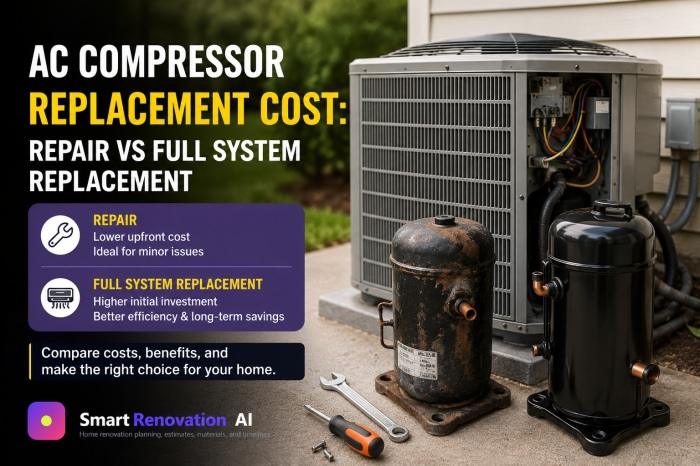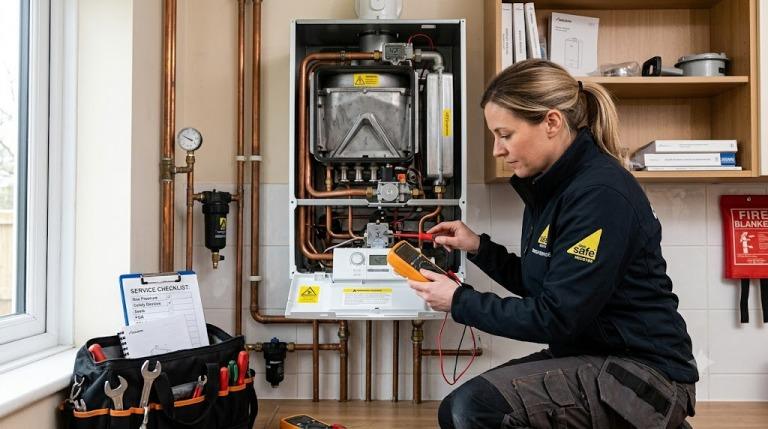
HVAC repair vs replacement cost is not only a question of the repair bill. System age, part failure, efficiency, comfort, duct condition, refrigerant type, warranty, safety, and future reliability all matter.
A useful estimate separates the urgent fix from the long-term decision. Sometimes a repair is clearly enough. Sometimes the repair is only the latest sign that the system is becoming expensive to keep alive.
Repair Or Replace Decision Table
| Situation | Repair signal | Replacement signal |
|---|---|---|
| Minor electrical part | Capacitor, contactor, thermostat, or sensor failure. | Repeated failures with poor system condition. |
| Major component | Covered by warranty or system otherwise healthy. | Compressor, coil, or heat exchanger on an old system. |
| Comfort issue | One clear airflow or thermostat issue. | Ongoing hot/cold rooms, duct problems, poor sizing. |
| Energy use | Recent maintenance problem explains the change. | Old inefficient equipment and rising bills. |
| Repair history | First significant repair. | Several repairs in a short period. |
Repair Makes Sense When The Problem Is Specific
A clear part failure on a system that otherwise cools or heats well may be worth repairing. Examples include a weak capacitor, bad thermostat, clogged drain, dirty coil, small blower issue, or replaceable control part. The quote should identify the failed part and include parts, labor, diagnostic fee, and warranty.
Replacement Makes Sense When The System Is The Problem
Replacement becomes more realistic when the system is old, major parts fail, refrigerant is costly or hard to support, repair history is frequent, comfort is poor, or the equipment is mismatched to the home. In that case, the estimate should include equipment, removal, labor, thermostat, electrical, drain, permits, startup, and warranty.
Ductwork Can Change The Answer
A new system cannot fully solve comfort problems if the ductwork is undersized, leaking, poorly insulated, blocked, or badly balanced. Before approving replacement for uneven comfort, ask whether ducts, returns, vents, insulation, and airflow were reviewed.
For duct and control details, the thermostat and ductwork checklist helps keep equipment and airflow questions separate.
Photos And Details To Upload
- Outdoor unit and indoor equipment.
- Model and serial labels.
- Thermostat screen.
- Filter and return grille.
- Ducts, vents, dampers, and access where visible.
- Rooms that are too hot, cold, humid, or noisy.
- Repair history and recent service notes.
Questions Before Approving Replacement
Ask how equipment size was chosen, whether ducts were checked, what efficiency level is included, what thermostat is included, how drainage is handled, whether permits are included, and what labor warranty applies. A replacement quote should not simply name a unit and a total.
Questions Before Approving Repair
Ask what failed, why it failed, whether the repair is likely to be temporary, whether other major parts are weak, and whether the diagnostic fee applies to the repair. If refrigerant is added, ask whether leak detection is recommended.
Scope Control
If the request is HVAC repair, the report should not add paint, flooring, roofing, or cabinetry. Relevant categories include HVAC contractors, replacement equipment, filters, thermostats, ductwork, electrical support, drain supplies, and parts suppliers.
Cost Comparison Should Include The Next Few Years
A repair bill can be cheaper today and still be the wrong decision if the system is likely to need another major repair soon. A replacement can be expensive today and still be unnecessary if the problem is a simple part. A useful comparison looks at today’s repair, expected remaining life, comfort improvement, warranty, energy use, and reliability.
Major Part Failures Need Context
A compressor, evaporator coil, heat exchanger, blower motor, or control board failure should not be priced in isolation. The technician should explain the age and condition of the rest of the system. Replacing one expensive part on weak equipment can be risky if other major parts are also near failure.
System Sizing And Comfort
Replacement quotes should not be based only on the size of the old unit. Oversized systems can short-cycle and control humidity poorly. Undersized systems can run too long and fail to keep up. Proper sizing depends on the home, insulation, windows, ductwork, layout, and climate demands.
Warranty And Financing Questions
Ask what is covered by manufacturer warranty, labor warranty, part warranty, and any maintenance requirement. If financing is offered, compare the final financed cost, not only the monthly payment. A low payment can hide a higher total cost.
Repair Notes To Keep
Keep invoices, diagnostic notes, model numbers, part names, refrigerant details, and service dates. If the same symptom returns, these notes help the next technician understand the pattern instead of starting from zero.
FAQs
When should HVAC repair be considered?
Repair can make sense when the system is not too old, the issue is specific, parts are available, and comfort is otherwise acceptable.
When does HVAC replacement make sense?
Replacement may be worth discussing when major parts fail, repairs repeat, efficiency is poor, comfort is uneven, or the system is near end of life.
What affects HVAC replacement cost?
System type, size, efficiency, ductwork, electrical, permits, thermostat, access, removal, labor, and warranty affect cost.
Can ductwork make a new HVAC system perform badly?
Yes. Poor duct design, leaks, restrictions, and insulation issues can reduce comfort even with new equipment.
What photos help HVAC estimates?
Show indoor equipment, outdoor unit, thermostat, labels, ducts, filters, vents, damage, access, and problem rooms.