
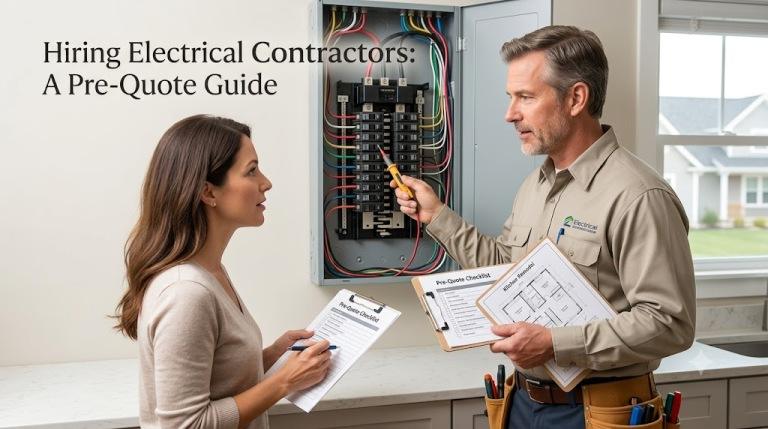
Hiring Electrical Contractors: What to Check Before Anyone Opens Your Panel
Electrical work is one of the few home projects where a cheap mistake and a dangerous one can look identical on a quote sheet. This guide breaks down what a qualified electrical contractor actually does, which credentials matter, what shifts the price, and how to compare bids without getting talked into more — or less — than the job needs.
Most homeowners don’t think about their electrical system until it stops behaving — a breaker that trips for no clear reason, an outlet that’s warm to the touch, or a remodel that suddenly needs three new circuits nobody budgeted for. At that point, the instinct is to call the first name that shows up in a search and get a number. That approach works fine for a leaky faucet. It’s a riskier way to hire someone whose work sits behind your walls, inside your panel, and directly between your house and an electrical fire.
The good news is that vetting an electrical contractor isn’t complicated once you know what you’re actually checking for. It comes down to four things: what the job legally requires, who’s allowed to do it, what typically drives the price, and how to tell a thorough quote from a rushed one.
When the Job Needs a Licensed Contractor, Not a Generalist
Not every electrical task requires a specialist. Replacing a light fixture, swapping a switch plate, or resetting a tripped breaker is well within reach for a confident homeowner or a general handyman. The line gets crossed the moment a project touches permanent wiring, the service panel, or anything a building inspector would want to sign off on.
Bring in a licensed electrical contractor when the work involves:
- A panel upgrade, replacement, or added subpanel
- New circuits for a kitchen remodel, home addition, or finished basement
- Rewiring any part of a home built before the 1980s with outdated wiring
- A dedicated circuit for an EV charger, hot tub, or large appliance
- Recurring breaker trips, warm outlets, flickering lights, or a burning smell
- Any work required to pass a home inspection or insurance review
On the other end of the spectrum, a straightforward fixture swap or outlet replacement is often a smaller, more predictable job — useful to know before you assume every electrical task needs a full service call.
Don’t wait on warning signs. A breaker that trips repeatedly, an outlet that feels warm, or a persistent burning smell near a fixture are not cosmetic issues. Treat these as same-week calls, not something to fold into a future remodel budget.
What’s Actually Inside Their Scope of Work
“Electrical contractor” covers a wide range of jobs, and the scope on your quote should reflect the specific one you’re hiring for. Broadly, the work falls into three categories:
Service and panel work
Upgrading an outdated fuse box or undersized panel, adding a subpanel for a garage or addition, and running the main service line that connects your home to the utility grid. This is the highest-stakes category and the one where licensing and permits matter most.
Circuit and wiring installs
Running new circuits for renovated spaces, adding outlets, relocating switches, wiring recessed lighting, and installing dedicated lines for appliances, EV chargers, or workshop equipment.
Repair and diagnostic work
Tracing the cause of tripped breakers, dead outlets, or flickering lights; replacing damaged wiring; and correcting code violations found during an inspection or insurance survey.
If your project is part of a broader remodel rather than a standalone repair, it can help to look at electrical alongside the rest of the electrical and lighting scope for the room — fixtures, switch placement, and circuit needs tend to get decided together, not one at a time.
The Credential Checklist Before Anyone Touches Your Panel
This is the part homeowners most often skip, and it’s the one that protects you if something goes wrong later. Before scheduling a visit, confirm the following in writing, not just verbally.
- Active license number — ask for it directly and check it against your state or local licensing board’s public lookup tool.
- General liability insurance — covers damage to your property during the job. Ask for a certificate, not just a verbal assurance.
- Workers’ compensation coverage — protects you if someone is injured on your property while working.
- Bonding — a financial guarantee that provides recourse if the contractor fails to complete the job as agreed.
- Permit responsibility — confirm who pulls the permit and whether the fee is already built into the quote.
- Written estimate — itemized, not a single lump sum, so you can see labor, materials, and fees separately.
A contractor who hesitates to share a license number or dodges questions about insurance is telling you something important before the job has even started. Legitimate contractors are used to these questions and usually answer them without friction — and having a short list of questions ready before the first call makes it much easier to compare answers across contractors later.
What Moves the Price Up or Down
Two homes with what sounds like “the same job” can land on very different quotes, and it’s rarely about one contractor overcharging. These are the variables that most often explain the gap:
| Factor | Why it changes the price |
|---|---|
| Panel age & capacity | An outdated or undersized panel often needs a full upgrade before new circuits can be added safely. |
| Wire type & condition | Older aluminum or knob-and-tube wiring usually requires more extensive and more careful replacement than modern copper. |
| Access | Open studs during a remodel are far cheaper to wire than finished walls, tight attics, or crawlspaces requiring patch-up work. |
| Permit & inspection requirements | Panel work and new circuits typically require a permit and a scheduled inspection, which adds time and a fee. |
| Number & type of circuits | A dedicated 240V line for an EV charger or range costs more than a standard 15-amp outlet circuit. |
| Timing | Emergency or after-hours calls typically carry a premium over scheduled, planned work. |
None of these variables is a red flag on its own — they’re simply the honest reasons pricing shifts. A contractor who can explain which of these apply to your project, and why, is showing you they’ve actually assessed the job rather than quoting from a flat rate card.
Questions Worth Asking Before You Sign
A short conversation before the quote is finalized tends to save far more than it costs. Work through these in order — each answer usually informs the next question.
Warning Signs Worth Walking Away From
Most electrical contractors are straightforward to work with, but a small number of practices should end the conversation immediately.
Reading Two Quotes Side by Side
Once you have two or three written estimates, resist the urge to sort by price alone. Line them up by scope first, then price — the same general approach covered in how to compare contractor quotes applies just as much to electrical bids as it does to any other trade. Confirm each quote covers the same circuits, the same materials grade, permit fees, and any drywall or patch-up work after the job. A quote that’s noticeably lower often excludes one of these — not because the contractor is more efficient, but because something has been left off the page.
- Same number and type of circuits listed on both quotes
- Permit fees shown as included or itemized separately
- Material specifics named, not just “standard materials”
- Cleanup and drywall patch responsibility clearly assigned
- Payment schedule tied to project milestones, not a single lump sum
Getting Your Home Ready Before the Visit
A little preparation shortens the visit and gives the contractor better information to quote from. Clear access to the electrical panel, note the approximate age of your home’s wiring if you know it, and list any symptoms — tripped breakers, dead outlets, flickering lights — with rough timing on when they started. Wide shots of the panel and problem areas, along with close-ups of anything visibly damaged, follow the same logic as taking photos for any renovation estimate — more visual context up front means fewer return visits later. If the project is tied to a remodel, having the room layout or new appliance specs ready lets the contractor size circuits correctly the first time, instead of guessing and adjusting later.
A good sign during the walkthrough. A contractor who asks about your panel’s age, checks the attic or crawlspace access, and asks what appliances you plan to add later is scoping the job properly — not just eyeballing a number.
Frequently Asked Questions
How do I know if I need an electrical contractor instead of a handyman?
Any job involving the panel, new circuits, permanent wiring, or work hidden behind a wall or ceiling should go to a licensed electrical contractor. A handyman can typically handle a light fixture swap or a switch plate, but panel work and new circuit installs generally require a permit and licensed sign-off.
What is the difference between a licensed electrician and an electrical contractor?
A licensed electrician is the qualified tradesperson doing the physical work. An electrical contractor is usually the licensed business that employs electricians, pulls permits, carries liability insurance, and takes legal responsibility for the finished job.
Should I get more than one quote before hiring?
Yes. Three quotes is a reasonable target for anything beyond a minor repair. Comparing bids helps you spot outliers, confirm what’s included, and identify contractors who stay vague about permits, materials, or timelines.
Why do quotes vary so much for what sounds like the same job?
Price gaps usually reflect what’s included rather than differing labor rates. Panel age, wire type, access difficulty, and whether permit fees or patch-up work are covered all change the real scope, even when the job description sounds identical on paper.
What paperwork should I keep after the job is finished?
Keep the signed permit, the final inspection result if one was required, an itemized invoice, and any warranty documentation. These matter later for insurance claims, resale disclosures, and future service calls.
The short version
Confirm the license and insurance in writing, match the quote to the actual cost drivers on your project, ask the five questions before you sign, and compare bids by scope before you compare them by price. That order — not the fastest phone call — is what keeps an electrical project safe, on budget, and free of surprises once the walls are closed back up.

One Comment