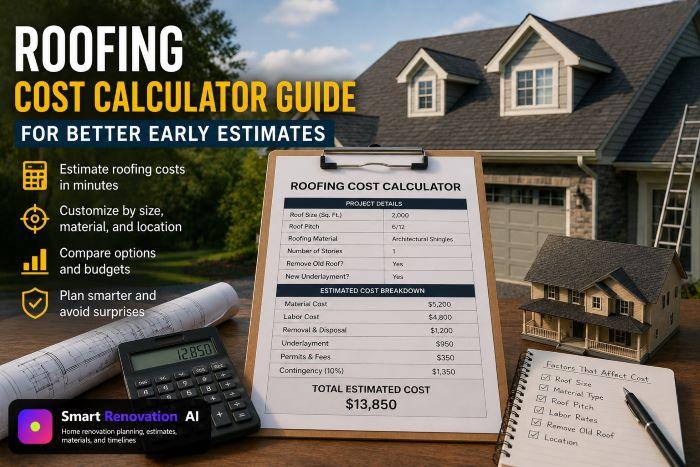
A roofing cost calculator is useful only when the inputs match the roof. Roof area, pitch, material type, tear-off, waste, flashing, underlayment, ventilation, access, and hidden decking condition can all change the estimate.
The calculator should organize the first estimate, not replace a roofing inspection. Roof work involves height, weather, safety, water control, and details that are easy to miss from the ground.
Roof Calculator Inputs
| Input | Why it matters |
|---|---|
| Roof area | Material quantity starts here, but roof shape changes the number. |
| Pitch | Steeper roofs need more surface area and harder labor. |
| Material | Asphalt shingles, metal panels, tile, and membrane systems price differently. |
| Layers | Old roof layers affect tear-off, disposal, and deck inspection. |
| Flashing | Walls, chimneys, vents, valleys, and skylights need water-control details. |
| Access | Height, slope, parking, staging, and debris path affect labor. |
Roof Area Is Not Floor Area
A home footprint can help with early planning, but roof area changes with pitch, overhangs, dormers, valleys, hips, garages, porches, and extensions. Complex roofs usually have more waste and more detail work than simple roof planes.
Use the roof area calculator for rough measurement planning, then let a roofer confirm actual roof squares, pitch, and condition.
Material Systems
Roofing material is not only the visible surface. A quote may include underlayment, starter strips, ridge caps, drip edge, flashing, fasteners, vents, sealant, ice or water barrier where needed, and disposal. If these items are not listed, ask whether they are included.
Calculator Results Need Reality Checks
A calculator may estimate shingles or panels, but it cannot see rotten decking, hidden leaks, poor ventilation, old flashing, unsafe access, or code-related requirements. If the roof has stains inside, sagging areas, missing shingles, repeated leaks, or old repairs, the estimate should include inspection language.
Photos To Pair With Calculator Inputs
- Ground-level roof views from each side.
- Leak stains inside the home.
- Gutters, flashing, vents, skylights, chimneys, and roof valleys.
- Attic or ceiling evidence if safe.
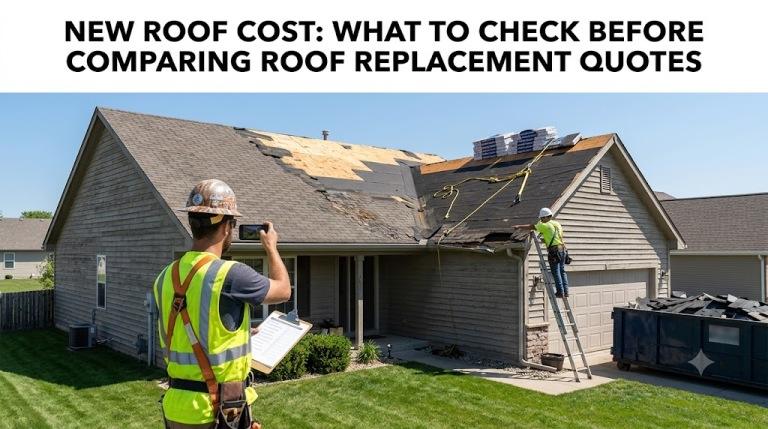
- Access path for crew and debris removal.
When To Use A Calculator Versus A Repair Planner
Use a calculator when the question is quantity-led: roof area, shingles, metal panels, pitch, or material allowance. Use a planner when the question is diagnostic: leak near a chimney, damaged flashing, roof stain, missing shingles, or whether repair or replacement is more realistic.
Waste Allowance Should Match Roof Shape
A simple gable roof may need a smaller waste allowance than a cut-up roof with valleys, hips, dormers, skylights, and many edges. Waste is not only discarded material; it also covers starter pieces, ridge pieces, cut panels, pattern matching, breakage, and ordering enough material to avoid a short shipment near the end of the job.
Roofing calculators often show a neat number, but material suppliers and roofers round to bundles, squares, sheets, or panels. The final order should include realistic rounding, not just exact square footage.
Repair Or Replacement Signal Check
| Signal | Calculator adjustment |
|---|---|
| One localized leak | Use repair planning before pricing a full replacement. |
| Multiple roof planes failing | Replacement planning may be more realistic than repeated repairs. |
| Soft decking or attic stains | Add inspection and decking allowance before trusting the material total. |
| Old flashing at walls or chimneys | Confirm flashing replacement, not only shingle replacement. |
| Poor attic airflow | Include ventilation review because heat and moisture can shorten roof life. |
Supplier And Contractor Categories
Roofing estimates may involve roofing contractors, roof material suppliers, gutter companies, insulation or ventilation specialists, skylight installers, and waste disposal providers. The relevant category depends on whether the job is a leak repair, material replacement, ventilation fix, gutter-related water issue, or full roof system replacement.
What A Calculator Should Not Include Automatically
A roofing calculator should not add electrical, plumbing, interior paint, cabinetry, flooring, or unrelated renovation work just because the home is being repaired. If the request is roof area or shingle quantity, the output should stay on roofing material, underlayment, flashing, tear-off, disposal, labor, safety, and inspection allowances.
This matters because broad renovation estimates can look impressive while being less useful. A homeowner checking roof cost needs a focused answer: how much roof surface, which material system, what waste factor, what details, what labor, and which items need contractor confirmation.
How To Read The Final Number
The final calculator result should be treated as a planning range. The lower end usually assumes clear access, simple roof geometry, known material, and no hidden damage. The higher end allows for more roof planes, steeper pitch, more flashing, better material, difficult access, or deck repairs discovered during inspection.
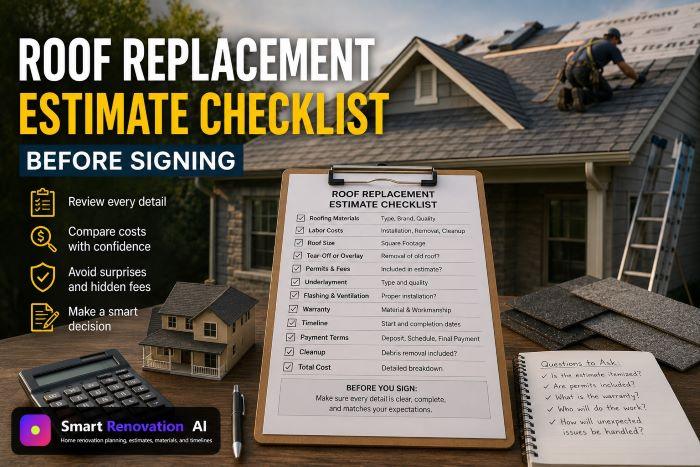
That range should help a homeowner ask better questions before signing a contract. It should not be used to pressure a roofer into matching an online number when the actual roof has different pitch, access, material, damage, or water-control details.
If the calculator result seems far below a contractor quote, compare the assumptions first. The contractor may be including tear-off, disposal, flashing replacement, deck repairs, permits, ventilation, or steep-roof labor that the first calculation did not include.
FAQs
What inputs does a roofing cost calculator need?
Roof area, pitch, material type, layers, waste allowance, tear-off, flashing, ventilation, access, and repair scope help calculate roofing cost.
Is roof area the same as home floor area?
No. Roof area changes with pitch, overhangs, roof shape, dormers, valleys, and waste.
Why does roof pitch affect cost?
Steeper roofs can increase material area, labor difficulty, safety requirements, and installation time.
Should flashing be included in roofing cost?
Yes. Flashing around chimneys, walls, valleys, skylights, and penetrations can be critical to leak prevention.
Can a calculator replace a roofer inspection?
No. It helps plan quantities and questions, but roof condition, decking, access, and safety need professional inspection.