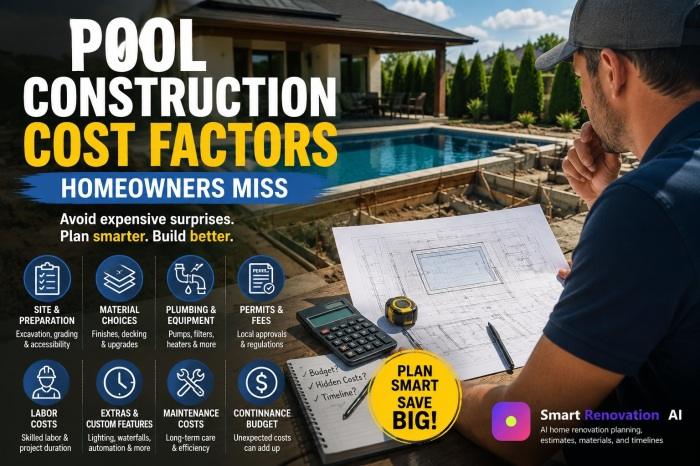
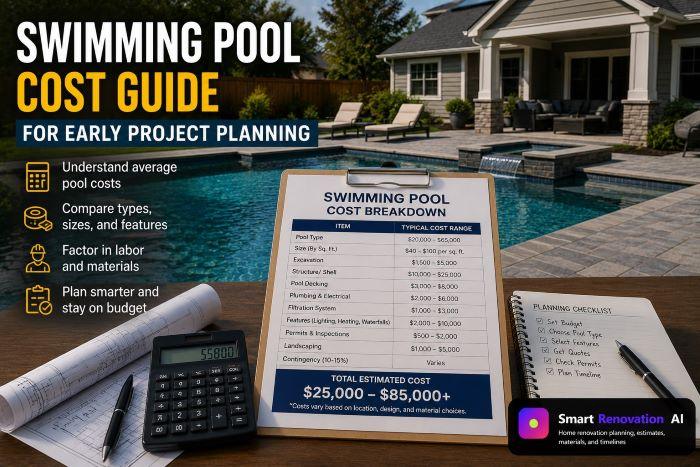
Swimming pool cost planning needs more detail than “build a pool.” Pool type, size, depth, excavation, access, shell, equipment, plumbing, electrical, decking, drainage, safety requirements, and landscaping all affect the estimate.
A responsible planning report should ask for missing pool details before giving a confident construction range.
Pool Cost Inputs
| Input | Why it matters |
|---|---|
| Pool type | Concrete, fiberglass, vinyl liner, and above-ground pools have different cost structures. |
| Size and depth | Affects excavation, shell, water volume, equipment, and decking. |
| Access | Excavation equipment and material delivery need a route. |
| Soil and slope | May affect excavation, retaining, drainage, and structural planning. |
| Equipment | Pump, filter, heater, automation, lighting, and sanitation choices affect budget. |
| Decking and landscape | The pool area is more than the water; surrounding surfaces matter. |
Construction Cost Is Not Only The Pool Shell
Homeowners often think of the pool shell first, but a working pool also needs excavation, plumbing, electrical, equipment pad, drainage, coping, decking, fencing or safety features where required, startup, and cleanup. Landscaping may need repair after construction access.
Questions The Estimate Should Ask
- What type of pool is desired?
- Approximate length, width, and depth?
- Is the yard flat or sloped?
- How will excavation equipment reach the area?
- Is decking included?
- Is heating, lighting, or automation included?
- Where will water drain?
- Are permits, fencing, or safety requirements expected?
Equipment And Operating Costs
Pump, filter, heater, sanitation, lighting, automation, covers, and cleaning equipment can change both upfront cost and long-term cost. A pool estimate should not treat equipment as an afterthought. The equipment package determines how the pool is used and maintained.
Decking, Drainage, And Outdoor Living
Pool construction often affects patios, grass, retaining edges, outdoor kitchens, fences, walkways, and drainage. Water should move away from the pool and home. Decking should be slip-conscious and suitable for wet use. If the surrounding yard is not planned, the pool can feel unfinished.
For related yard planning, the lawn and garden planner and outdoor drainage repair guide can help separate landscaping from pool construction.
Why Access Can Change The Quote
Backyard access controls equipment size, excavation speed, soil removal, concrete or shell delivery, and restoration. Narrow side yards, steps, fences, overhead wires, trees, and tight driveways can all affect cost. Upload photos of the access route, not only the desired pool location.
Photos To Upload
Show the full yard from several angles, house relationship, fence gates, side access, slope, existing patio, trees, drainage, utility areas, and where the pool might sit. If there is an inspiration pool, label it as inspiration so it is not confused with the actual site.
Separate The Pool From The Backyard Package
Some pool quotes include only the pool shell and equipment. Others include decking, fencing, lighting, landscape repair, drainage, and startup. Those two numbers can look wildly different while both being honest. The estimate should show what belongs to pool construction and what belongs to the surrounding outdoor project.
Decking is one of the most common areas of confusion. A small concrete band around the pool is not the same as a full patio, outdoor seating area, retaining wall, paver design, or pathway connection to the home. If the homeowner expects a finished backyard, the quote needs a finished-backyard scope.
Soil, Water, And Utility Checks
Pool cost planning should include boring, soil review, drainage review, utility location, or engineering discussion where the site needs it. Rock, poor soil, high water table, slope, retaining requirements, hidden utilities, or limited access can change the project after excavation begins. A careful quote explains how those conditions are handled.
Common Add-Ons To Decide Early
Heating
Heaters, heat pumps, gas lines, electrical supply, and expected use season should be part of the decision.
Lighting
Underwater lights, landscape lighting, pathways, and equipment-area lighting can involve electrical planning.
Automation
Controls for pump, heating, lighting, and sanitation can add convenience but should be priced clearly.
Covers and safety
Covers, fencing, gates, alarms, and barriers may be required or strongly recommended depending on the project.
How To Compare Pool Bids
Do not compare only the final total. Compare pool type, size, depth, shell method, equipment brand or class, plumbing layout, electrical allowance, decking square footage, drainage, permits, cleanup, fill water, startup chemicals, warranty, and what happens if excavation reveals difficult conditions.
A detailed pool estimate should also say what is not included. Landscape restoration, irrigation repair, fence removal, retaining walls, utility upgrades, extra concrete, and soil haul-off can become meaningful costs if they are left vague.
What To Decide Before Calling Builders
Before collecting bids, decide whether the pool is mainly for exercise, family use, entertaining, cooling off, or visual value. That decision influences size, depth, steps, seating ledges, heating, lighting, decking, and safety features. A clear use case helps the contractor avoid pricing features that do not match the way the pool will actually be used.
It also helps to set a separate allowance for future furniture, shade, planting, privacy screening, and maintenance supplies. Those items may not be part of the pool build, but they affect the real budget needed to enjoy the finished space.
FAQs
What affects swimming pool cost?
Pool type, size, depth, excavation, access, shell, equipment, plumbing, electrical, decking, drainage, permits, and landscaping affect cost.
Why does pool size matter?
Size affects excavation, shell material, water volume, equipment, decking, fencing, and maintenance planning.
What should be included in a pool construction estimate?
Excavation, structure, waterproofing or liner, pump, filter, plumbing, electrical, decking, drainage, permits, cleanup, and startup should be discussed.
Can a pool estimate be accurate without site details?
Not very accurate. Soil, access, size, type, utilities, slope, and drainage are important.
What photos help plan a pool estimate?
Show the full yard, access route, slope, existing patio, utilities, fence, drainage, trees, and where the pool is desired.