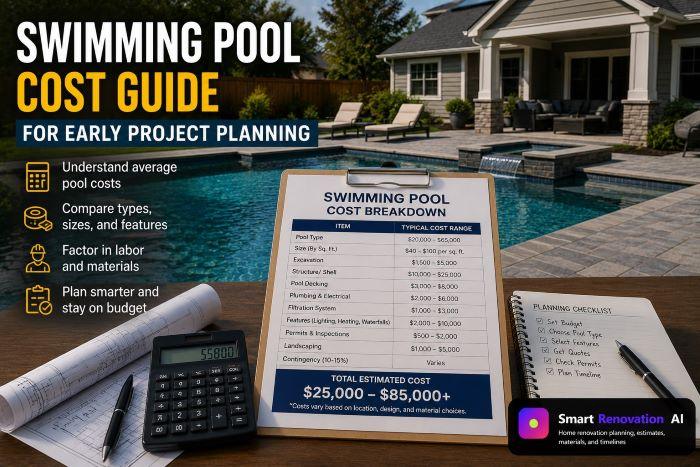
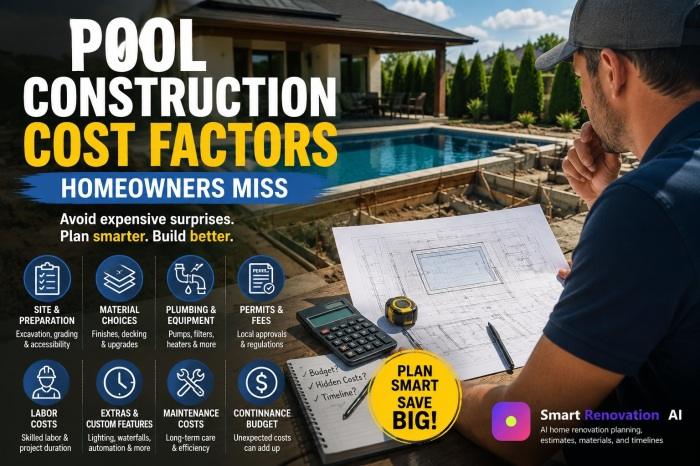
Pool construction cost is not only about the pool shell. A complete estimate should include site access, excavation, soil conditions, plumbing, filtration, electrical work, decking, drainage, safety requirements, landscaping, and the work needed to restore the yard after construction.
This is why a pool request should trigger questions before a report is generated. “Swimming pool construction” is too broad by itself. An in-ground concrete pool, fiberglass pool, vinyl liner pool, plunge pool, and above-ground pool have different cost structures and different site requirements.
The Pool Type Sets The Starting Scope
The first planning decision is pool type. It affects excavation, shell, installation time, customization, equipment, decking, and long-term maintenance.
| Pool type | Estimate should discuss | Common planning issue |
|---|---|---|
| Concrete or gunite | Excavation, steel, plumbing, shell, plaster or finish, tile, coping, equipment | Highly customizable but labor and site conditions matter heavily. |
| Fiberglass | Shell delivery, crane or access, excavation, base prep, plumbing, backfill | Access can make or break the installation plan. |
| Vinyl liner | Wall system, liner, floor base, plumbing, coping, liner replacement planning | Liner durability and future replacement should be understood. |
| Plunge pool | Smaller footprint, equipment, depth, heating, decking, access | Smaller size does not remove excavation or equipment requirements. |
| Above-ground | Level base, pool kit, pump, ladder, deck or platform, electrical safety | Base preparation and safe access are often underestimated. |
Site Conditions That Change The Estimate
Two pools with the same size can cost differently because the yards are different. Slope, soil, retaining needs, drainage, tree roots, utility lines, narrow gates, fences, existing patios, and hauling distance all affect the plan.
Access
Excavators, trucks, concrete, shell delivery, and debris hauling need a route. Tight access can require smaller equipment or extra labor.
Soil and slope
Rock, unstable soil, poor drainage, or steep yards can change excavation, retaining, and backfill requirements.
Utilities
Underground lines, electrical supply, gas for heating, water lines, and drainage paths should be considered before digging.
Outdoor layout
Decking, fencing, paths, shade, equipment pad, landscaping, and yard recovery can be part of the real budget.
Cost Lines A Pool Quote Should Not Hide
A pool quote should show more than the shell price. Many disputes happen because the quote does not clearly state what happens around the pool.
| Line item | Why it matters | Question to ask |
|---|---|---|
| Excavation and hauling | Soil removal, access, disposal, and equipment time can be significant. | “Is hauling and disposal included?” |
| Plumbing and filtration | Pumps, filters, valves, skimmers, returns, and pipe runs define performance. | “Which equipment model and capacity is included?” |
| Electrical | Pool equipment, bonding, lighting, controls, and safety requirements need proper work. | “Is electrical work included or separate?” |
| Decking and coping | The finished pool edge affects safety, drainage, appearance, and usable space. | “How many square feet of deck are included?” |
| Drainage | Water should move away from the pool, house, and neighboring areas. | “How will runoff be handled?” |
| Yard restoration | Construction can disturb lawn, beds, fencing, irrigation, and access paths. | “What cleanup and restoration are included?” |
Timeline Factors Homeowners Miss
Pool construction can involve design approval, utility marking, access preparation, excavation, shell work, plumbing, electrical, inspection, decking, equipment setup, filling, balancing, cleanup, and landscaping. Weather, permits, inspections, material availability, and subcontractor timing can all affect the schedule.
A quote should explain the sequence. It should also say what parts of the yard will be unavailable and how access will be protected. If a homeowner wants a patio, outdoor kitchen, pergola, fence, or landscaping at the same time, those projects should be coordinated rather than priced as afterthoughts.
Questions The Planner Should Ask Before Estimating
- What type of pool is being considered?
- Approximate length, width, depth, and shape?
- Is the yard flat, sloped, tight, fenced, or hard to access?
- Should decking, coping, lighting, heating, or landscaping be included?
- Where will equipment be placed?
- Are there trees, retaining walls, drainage issues, or underground utilities?
- Is this a new pool, pool repair, pool cleaning, or pool maintenance request?
Safety And Permit Notes
Pool projects can involve excavation, electrical bonding, fencing or barrier rules, drainage, setbacks, and inspections. A planning report should not replace local requirements. It should help the homeowner ask better questions before signing a pool contract.
How Pool Choices Affect The Yard Around It
The pool is only one part of the finished backyard. Decking width, shade, outdoor seating, fencing, drainage, equipment noise, lighting, privacy, and landscaping can change how the space feels. These items should be discussed early because they are harder to add cleanly after the pool is finished.
A narrow deck may reduce upfront cost but limit chairs and safe walking space. A pump location may be convenient for plumbing but noisy near a bedroom window. A beautiful pool can still create drainage problems if runoff is not directed away from the house. Planning the surrounding yard protects the investment in the pool itself.
| Backyard decision | Why it belongs in planning | Quote detail to request |
|---|---|---|
| Decking width | Controls usable walking and seating space. | Square footage, material, drainage, and coping. |
| Equipment pad | Affects access, sound, service, and pipe runs. | Location, base, electrical, and screening. |
| Fence or barrier | Often tied to safety and local requirements. | Height, gate, latch, and inspection responsibility. |
| Landscape repair | Construction can disturb grass, beds, irrigation, and paths. | Restoration scope and exclusions. |
Budget Scenarios To Discuss Before Signing
Pool construction quotes are easier to compare when they show more than one scenario. A basic scenario may include the pool, required equipment, basic coping, and minimal deck. A balanced scenario may include more usable deck, lighting, cleaner equipment placement, and better drainage. A premium scenario may add heating, automation, upgraded finish, larger patio space, water features, or detailed landscaping.
Those scenarios should not be mixed into one vague number. The homeowner should know which parts are required for a working pool and which parts are comfort or appearance upgrades. This makes it easier to reduce cost without cutting excavation quality, plumbing, electrical safety, drainage, or structural work.
Use Smart Renovation AI with yard photos, access photos, and the pool type you want so the estimate does not drift into unrelated outdoor work.
FAQs
What affects pool construction cost the most?
Pool type, size, excavation, soil, access, shell material, plumbing, filtration, electrical work, decking, drainage, permits, and landscaping can all change the estimate.
Why does access matter for pool installation?
Tight access can affect excavation equipment, hauling, concrete delivery, material staging, and labor time.
Should decking be included in a pool construction estimate?
Yes, because pool edges, coping, decking, drainage, and access paths can be a significant part of the finished project.
Can a pool estimate be accurate without site details?
Only as a rough planning range. Soil, slope, utilities, access, drainage, and local requirements need review before a reliable quote.
What photos help with pool planning?
Use photos of the full yard, gate access, slope, existing patio, drainage areas, utilities, nearby trees, fences, and the house wall facing the pool area.