
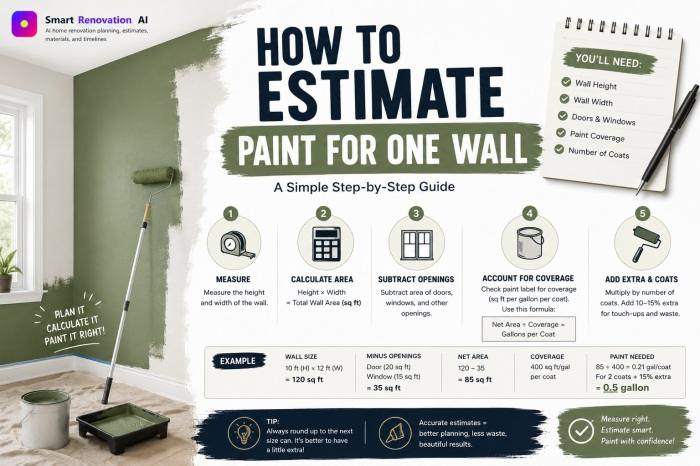
Estimating paint for one wall should be simple, but the final cost can change if the wall has stains, holes, texture, trim, dark color, moisture marks, or a strong color change. A good estimate measures the wall first, then checks the condition before deciding paint, primer, tools, and labor.
This matters because a one-wall request should not turn into a full-room renovation estimate. If the homeowner asks for one accent wall, the estimate should focus on paint, prep, primer if needed, protection, and cleanup.
The Simple Measurement Formula
Measure the wall width and height. Multiply them to get wall area. Subtract large windows, doors, or openings if they take up meaningful space. Most small outlets and switch plates do not need to be subtracted because they are handled in the waste and cutting allowance.
| Step | What to do | Why it matters |
|---|---|---|
| Measure wall | Width x height | Creates the base paintable area. |
| Subtract openings | Large windows, doors, built-ins, or openings | Prevents overestimating large non-painted areas. |
| Check coats | One coat, two coats, primer plus coats | Color change and wall condition can double material needs. |
| Add waste | Small allowance for roller loading, texture, touch-up, and edges | Prevents running short near the finish. |
| Round to container size | Quart, half-gallon, gallon, or local product size | Paint is not usually bought to the exact ounce. |
Condition Check Before Buying Paint
The wall condition decides whether the estimate needs primer, filler, sanding, stain blocker, or extra drying time. A clean wall with a similar color may be straightforward. A wall with patches, smoke marks, water stains, old glossy paint, or dark color may need more preparation.
Clean wall
May need light cleaning, tape, protection, and one or two finish coats depending on color.
Patched wall
Needs filler, sanding, dust removal, spot primer, and careful blending so patches do not flash through.
Stained wall
Needs the stain source checked first, then stain-blocking primer before paint.
Accent wall
Needs clean edges, corner cuts, trim protection, and enough coverage for a strong color change.
Paint Quantity Is Not The Whole Cost
Material may be small for one wall, but labor can still have a minimum. A painter still needs to protect the area, remove plates, fill nail holes, sand, cut edges, roll coats, clean tools, and possibly return after drying. DIY cost may be mostly paint and tools. Contractor cost includes time, travel, setup, and finish quality.
| Cost item | When it appears | What to ask |
|---|---|---|
| Paint | Always | What finish and quality level is being used? |
| Primer | Stains, patches, raw drywall, strong color change | Is it full-wall primer or spot primer? |
| Wall repair | Holes, cracks, dents, rough patches | How many patches are included? |
| Protection | Furniture, flooring, trim, nearby surfaces | Are drop cloths, tape, and masking included? |
| Labor minimum | Small jobs handled by a professional | Is there a minimum visit charge? |
One Wall, Full Room, Or Blended Repaint?
Sometimes one wall can be painted cleanly. Other times the surrounding walls are faded, textured, or a slightly different sheen, so a perfect color match is difficult. The estimate should state whether the work is one wall only or whether blending into nearby surfaces is included.
If the wall has water staining, the source should be checked before repainting. If the wall has cracks, loose plaster, or drywall damage, repair should be priced separately from paint. If the wall is an accent color, the edges and trim protection may matter more than the paint quantity.
Photo Checklist For A Better Estimate
- One photo of the whole wall from straight on.
- Close-ups of holes, stains, cracks, texture, or peeling paint.
- Photos of trim, ceiling line, outlets, switches, and corners.
- A photo showing nearby furniture or flooring that needs protection.
- A photo of the color or finish you want if available.
DIY Or Painter?
DIY makes sense when the wall is clean, easy to reach, and the homeowner already has basic tools. Hiring a painter can make sense when the wall is tall, textured, damaged, stained, part of a visible main room, or needs sharp accent-wall edges. Either way, the estimate should stay limited to the wall requested unless the homeowner asks for more.
Finish, Sheen, And Color Match
Paint quantity is only one part of a one-wall estimate. The finish has to match the room. Flat paint hides small wall flaws but can be harder to clean. Eggshell and satin are common for living areas because they balance appearance and wipeability. Semi-gloss may work for trim but can make wall imperfections stand out. If the wall is in a bathroom, kitchen, laundry, or high-touch area, the product choice should match moisture and cleaning needs.
Color matching can also change the plan. A one-wall repaint with the same stored paint may be simple if the old paint has not faded. A new can mixed from an old color code can still look different because sheen, age, lighting, and surface absorption affect the result. If a perfect match matters, the quote should mention whether the painter will paint only the wall, blend into corners, or recommend a larger repaint for consistency.
| Wall condition | Paint planning note | Possible extra item |
|---|---|---|
| New patch | Patch should be sealed so it does not flash through. | Spot primer and sanding. |
| Dark color change | Coverage may need more than one finish coat. | Tinted primer or extra coat. |
| Water stain | The source should be checked before paint. | Stain-blocking primer. |
| Accent wall | Edges and corners need clean cutting. | Extra masking and detail time. |
Use Smart Renovation AI and describe the exact wall, color change, condition, and whether primer or repair is needed.
FAQs
How do you estimate paint for one wall?
Measure width times height, subtract large openings, then divide by the paint coverage rate. Add primer or a second coat if the color change, stains, or wall condition require it.
Does one wall always need a full gallon?
Not always. A small wall may need less, but many homeowners buy a full container because paint is sold in set sizes and touch-up material is useful.
Should primer be included for one wall?
Primer is useful for stains, patched areas, raw drywall, strong color changes, glossy surfaces, or uneven absorption.
Why can painting one wall still have a labor minimum?
A contractor still has travel, setup, protection, patching, drying time, cleanup, and a return visit if multiple coats are needed.
What photos help estimate one-wall painting?
Show the entire wall, corners, trim, windows, outlets, stains, cracks, texture, and the surrounding color that may need blending.