
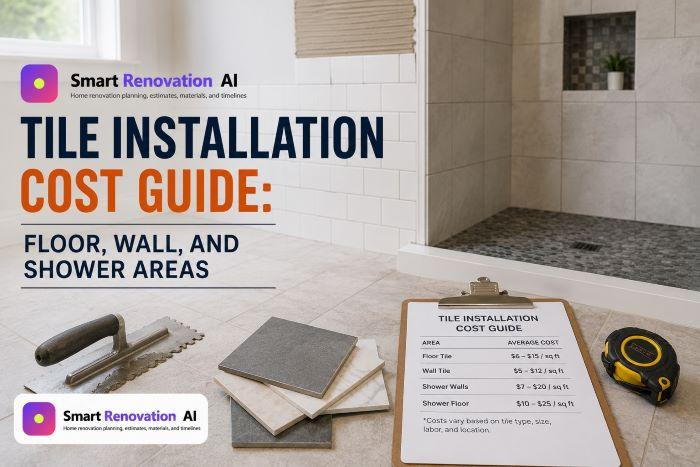
Tile installation cost depends on much more than the tile price. A reliable estimate looks at the surface, substrate, demolition, leveling, waterproofing, tile size, pattern, grout, trim, transitions, cuts, access, and labor.
Good tile work starts before the first tile is set. If the surface is weak, wet, uneven, cracked, or poorly prepared, the visible finish can fail even when the tile itself is good.
First Identify The Surface
Tile on a bathroom wall is not estimated the same way as tile on a garage floor, kitchen backsplash, shower floor, patio, stair riser, or fireplace surround. Each surface has different prep, movement, moisture, and edge details.
| Tile area | Estimate focus | Watch for |
|---|---|---|
| Floor | Leveling, subfloor, transitions, waste, layout. | Cracks, bounce, slopes, door clearances. |
| Shower | Waterproofing, drain slope, walls, curb, niche. | Leaks, poor slope, missing membranes. |
| Backsplash | Wall prep, outlets, edges, pattern, cuts. | Uneven counters, outlet extensions, corners. |
| Outdoor tile | Weather, drainage, slip resistance, movement. | Standing water, freeze-thaw risk, substrate. |
| Garage tile | Concrete condition, vehicle load, slope, drainage. | Oil stains, cracks, moisture, slab movement. |
Tile Size And Pattern
Large-format tile may reduce grout lines but can demand flatter surfaces and careful handling. Small mosaics can be slow because sheets, joints, and cuts need attention. Diagonal layouts, herringbone, borders, niches, and accent bands usually add layout time and waste.
Use the tile calculator for early quantity planning, but ask the installer to confirm waste based on pattern, room shape, and tile availability.
Prep Work Is The Price Difference
Two tile quotes can differ because one includes substrate preparation and the other assumes the surface is ready. Prep may include demolition, disposal, cleaning, crack isolation, floor leveling, cement board, waterproofing, primer, moisture control, or wall repair.
Materials To List Clearly
- Tile type, size, finish, and quantity.
- Thinset or adhesive suitable for the surface.
- Grout type and color.
- Waterproofing or uncoupling membrane where needed.
- Leveling compound or crack isolation.
- Trim, thresholds, edge profiles, and transitions.
- Sealant, caulk, spacers, and cleanup supplies.
Doorways, Edges, And Transitions
Tile rarely stops in a blank rectangle. It meets baseboards, door frames, cabinets, tubs, shower glass, drains, thresholds, stairs, and other flooring. A clean estimate should explain how those edges are finished. Transition strips, undercut doors, trim removal, and baseboard repainting may be separate work.
Tile Labor Is Skill-Heavy
Tile labor includes planning the layout, checking square, protecting surfaces, mixing material correctly, setting tile, cutting edges, keeping joints consistent, waiting for cure time, grouting, cleaning haze, sealing when required, and handling punch-list items. It is not only the time spent placing tile.
Photos To Upload
Show the full area, close-ups of cracks or damage, corners, doors, drains, existing flooring, wall surfaces, tile inspiration, and adjacent rooms. If the project is a shower or bathroom, include water stains, fan location, plumbing fixtures, and ceiling height.
How To Keep The Estimate Focused
If the request is tile installation, the report should not add paint, cabinets, plumbing, roofing, or lighting unless the customer asks for those items or the photo clearly shows they affect the tile work. For flooring-specific planning, the flooring and tile planner keeps the scope centered.
Measuring Tile Without Fooling Yourself
Measure the area, then add waste for cuts, pattern, breakage, and future repairs. A simple rectangular backsplash may need less waste than a bathroom floor with doorways, closets, toilet cutouts, and angled walls. Showers and patterned floors need special attention because layout decisions can change how many full tiles and cut tiles are used.
Order timing matters too. If the tile is special order, discontinued, handmade, or shade-sensitive, running short can delay the project or create color variation. Ask whether the installer wants extra material kept after the job for future repair.
Grout, Sealant, And Movement
Grout color, grout type, joint width, caulk at changes of plane, and movement joints can affect the final look and durability. Corners, tub edges, countertops, exterior edges, and large floors should not be treated the same as flat field tile. The quote should explain where flexible sealant is used instead of grout.
When Tile Removal Gets Messy
Removing old tile can damage drywall, backer board, subfloor, trim, or surrounding surfaces. Old mortar, adhesive, wire mesh, or multiple layers can add labor. If the existing tile is cracked, hollow, or loose, ask whether the installer expects floor leveling, crack isolation, or substrate replacement after demolition.
Tile In Wet Areas
Bathrooms, showers, laundry rooms, balconies, patios, and entry areas need more than a pretty tile selection. Moisture exposure, slip resistance, drainage, waterproofing, substrate stability, and cleaning method all matter. A glossy wall tile that looks good in a showroom may be wrong for a wet floor. A floor tile that is durable indoors may not be suitable outside.
Supplier Categories To Search
Depending on the project, nearby supplier searches may need tile stores, flooring suppliers, waterproofing suppliers, grout and adhesive suppliers, hardware stores, stone suppliers, or bathroom remodeling contractors. If the job is only backsplash tile, roofing or paint suppliers should not appear in the result.
Contractor Questions Before Approval
- What surface preparation is included?
- What tile pattern and grout joint are assumed?
- What happens if damaged substrate is found?
- Are edge trims and transitions included?
- Who supplies tile, adhesive, grout, and waterproofing?
- How long before the surface can be used?
FAQs
What affects tile installation cost?
Surface type, prep work, tile size, pattern, cuts, substrate condition, waterproofing, grout, trim, demolition, labor, and waste affect cost.
Why does tile pattern affect labor?
Patterns such as herringbone, diagonal, borders, and small mosaics require more layout time and cuts.
Is floor tile priced differently from wall tile?
Often yes because floor prep, leveling, movement joints, wall backing, waterproofing, and access differ.
Should tile trim be included?
Yes. Edge trim, transitions, corners, niches, and thresholds should be planned before installation.
What photos help estimate tile work?
Show the full surface, close-ups of damage, edges, drains, doors, baseboards, corners, and adjacent flooring.