
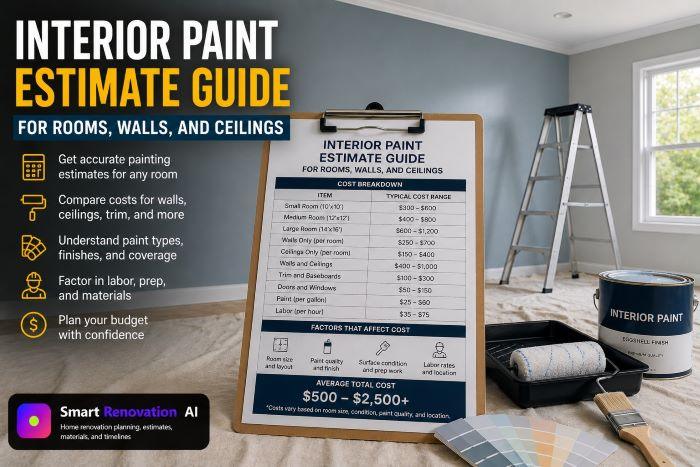
An interior paint estimate should be built around the exact surfaces being painted. One wall, a bedroom, trim, ceilings, doors, cabinets, and a full home repaint are different jobs and should not be priced as the same generic painting project.
The clearest estimates separate preparation, primer, paint, coats, labor, protection, and cleanup. That is how a homeowner avoids paying for unnecessary work or missing the surface that actually needs attention.
Define The Paint Scope
Before measuring, decide what is included. Walls only is different from walls plus ceiling. Trim painting is different from wall rolling. Doors, closets, baseboards, crown molding, window casing, built-ins, accent walls, and stairwells each affect time and materials.
| Surface | Estimate detail | Common miss |
|---|---|---|
| Walls | Square footage, color change, repairs, coats. | Forgetting patching and primer. |
| Ceilings | Height, stains, texture, light fixtures, repairs. | Assuming ceiling is included with walls. |
| Trim | Baseboards, casing, doors, sheen, prep. | Underpricing sanding and detail work. |
| Accent wall | One wall, edge lines, color intensity, finish. | Adding whole-room paint unnecessarily. |
| Stairwell | Height, access, railing protection, ladders. | Ignoring access difficulty. |
Wall Condition Matters
Paint makes a clean wall look better, but it does not fix dents, nail holes, cracks, peeling, water stains, greasy surfaces, or failed previous paint. The quote should state whether minor patching is included and what counts as extra repair.
If drywall needs more than small touch-ups, see the wall and ceiling repair cost guide before treating the job as paint only.
Primer And Color Change
Primer may be needed for stains, patched areas, new drywall, strong color changes, glossy surfaces, smoke odor, marker, or uneven absorption. Painting white over deep red, navy, or black can take more work than refreshing a similar color. Ask whether the estimate includes primer and how many finish coats are expected.
Furniture And Protection
Moving furniture, covering floors, removing switch plates, masking trim, protecting cabinets, and keeping rooms usable can all affect labor. A furnished home takes different preparation than an empty room. If pets, children, home offices, or daily access matter, discuss the work sequence before painting begins.
How To Estimate Paint Quantity
Measure wall height and width, subtract large openings if needed, then account for coats and product coverage. Textured walls, dark color changes, porous repairs, and rough surfaces may use more paint. The paint calculator can help estimate material before comparing painter quotes.
Photos To Upload
- Every wall being painted.
- Close-ups of holes, stains, peeling, or cracks.
- Trim, doors, windows, baseboards, and ceiling edges.
- Current paint color and desired color if known.
- Furniture and access constraints.
- Room measurements or a simple sketch.
One-Wall Paint Should Stay One Wall
If the customer says “paint this one wall,” the estimate should not add flooring, cabinets, lighting, plumbing, or full-room renovation. It may mention patching, primer, paint, tape, drop cloths, brushes, rollers, and cleanup. That kind of scope discipline builds trust.
Comparing Painter Quotes
Compare surface list, prep work, primer, paint brand or grade, number of coats, trim details, ceiling inclusion, furniture movement, protection, cleanup, timeline, and warranty. A vague per-room price may be fine for a simple repaint, but damaged walls and detailed trim need more clarity.
Trim, Doors, And Detail Work
Trim painting is slower than wall painting because it involves sanding, caulking, sharp lines, brush work, enamel or trim paint, and careful protection. Doors may need removal or drying space. Baseboards may need cleaning or repair before paint. If trim is included, ask for it as a separate line so it does not disappear inside a room price.
Ceilings Should Be Decided Early
Ceilings are often left out because they look acceptable until fresh walls make them appear dull. If the ceiling has stains, cracks, smoke marks, texture damage, or a different color, include it in the scope from the beginning. Ceiling painting may require different rollers, ladders, masking, and lighting removal.
Paint Quality And Sheen
Flat, matte, eggshell, satin, semi-gloss, and specialty finishes behave differently. High-traffic rooms may need washable paint. Bathrooms and kitchens may need moisture-tolerant products. Trim usually needs a more durable finish than walls. The quote should name the paint line or at least the grade being used.
Scheduling Around Daily Life
Interior painting can happen room by room or as a whole-home push. Families, home offices, pets, and furniture all change the plan. Ask how long rooms must stay clear, when windows can close, when pictures can return to walls, and whether touch-ups are included after final inspection.
Estimate Examples By Request Type
A one-wall repaint should list wall prep, primer if needed, paint, tape, protection, and cleanup. A full room repaint should list all walls, ceiling decision, trim decision, doors, repairs, and furniture movement. A move-in repaint may need a room-by-room schedule and faster color decisions. These are different estimates even when the same paint brand is used.
Paint Materials And Local Suppliers
Supplier suggestions should match paint work: paint stores, primer, rollers, brushes, trays, masking tape, drop cloths, patching compound, sandpaper, caulk, and ladders if needed. Flooring, roofing, cabinets, and plumbing should not appear for a paint-only request unless the user describes those items.
FAQs
What affects an interior paint estimate?
Room size, wall condition, color change, primer, number of coats, trim, ceilings, doors, furniture, protection, and labor affect cost.
Should trim and ceilings be included in wall painting?
Only if listed. Walls, trim, doors, and ceilings should be priced separately.
Does dark paint cost more to cover?
It can because strong color changes may need primer or extra coats.
What photos help an interior paint estimate?
Show each wall, corners, trim, ceiling, damage, furniture, windows, doors, and current colors.
Can one wall be estimated separately?
Yes. A one-wall paint estimate should only include that wall unless surrounding repairs or matching work are requested.