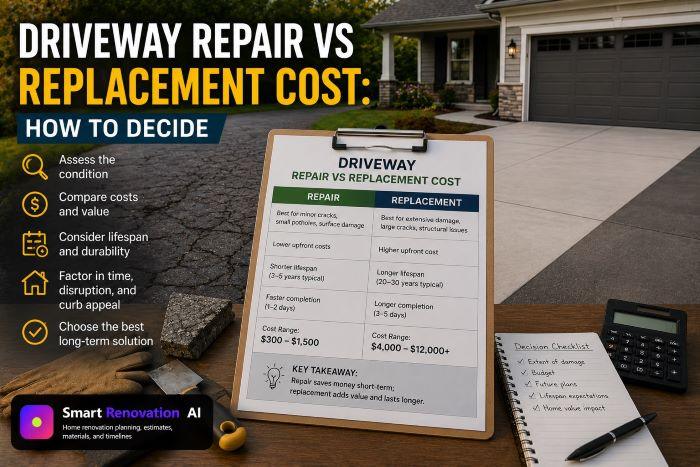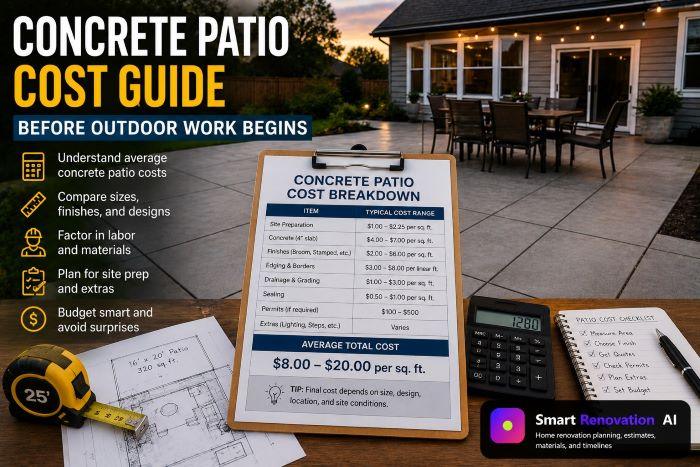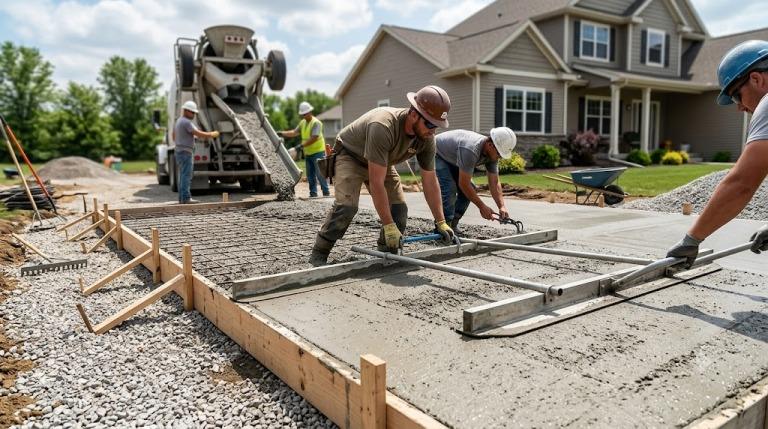
Concrete crack repair cost depends on why the crack happened. A hairline patio crack, a sunken driveway slab, a moving foundation-adjacent crack, and a broken garage floor edge are not the same repair.
The estimate should first decide whether the crack is cosmetic, water-related, movement-related, or part of a larger slab failure. That decision controls whether the work is sealing, patching, resurfacing, lifting, drainage correction, or replacement.
Read The Crack Before Pricing It
| Crack pattern | Possible meaning | Estimate direction |
|---|---|---|
| Hairline surface crack | Shrinkage or minor surface movement. | Seal or monitor if stable. |
| Wide crack with height difference | Settlement, base movement, or lifting. | Leveling or replacement review. |
| Cracks near low spots | Water may be weakening the base. | Drainage plus repair. |
| Edge breaks | Thin edge, vehicle load, poor support. | Patch, rebuild edge, or replace section. |
| Many connected cracks | Widespread slab failure. | Replacement may be more realistic. |
Repair Methods
Small stable cracks may be sealed to reduce water entry. Larger cracks may need routing, filling, patching, or resurfacing. Sunken slabs may need lifting if the slab is otherwise usable. Broken concrete with poor base support may need removal and replacement.
For driveway-specific decisions, compare this with the driveway repair versus replacement guide. A driveway crack exposed to vehicle weight and drainage is different from a small patio crack.
Drainage Can Make Repairs Fail
Water that runs into cracks, freezes, washes soil, or sits along slab edges can keep damaging concrete. If the area stays wet, slopes toward the wrong place, or has soil washing away below the slab, the estimate should include drainage or grading discussion before surface repair.
Resurfacing Versus Crack Repair
Resurfacing can improve appearance when the slab is stable and cracks are handled first. It is not a cure for moving concrete, deep settlement, poor base, or active water problems. Ask whether resurfacing is decorative, protective, or structural. In many cases it is a finish layer, not a base repair.
Photos To Upload
- Full slab or driveway view.
- Close-up of each major crack.
- Photo showing crack width with a coin or ruler if safe.
- Edges, joints, steps, garage threshold, and nearby walls.
- Puddles, drainage path, soil washout, or sinking.
- Vehicle wear or heavy-load areas.
Quote Lines To Compare
Compare crack preparation, filler or repair material, cleaning, routing, patching, leveling, resurfacing, drainage correction, disposal, finish blending, curing time, and warranty. A lower quote may only fill the top of the crack, while a better quote may address water entry or slab movement.
When To Avoid A Quick Patch
A quick patch may be a waste if the slab is sinking, water is running under it, tree roots are moving it, or the concrete is breaking apart. It may still be useful as a temporary safety repair, but the estimate should say if it is temporary.
Supplier Categories That Match
Relevant supplier categories include concrete repair material, crack sealant, epoxy where appropriate, patch compound, resurfacing products, gravel base, drainage materials, equipment rental, and concrete contractors. Paint, cabinets, roofing, or unrelated renovation categories should not appear for a crack-only request.
Interior Slab Cracks Need Different Questions
A garage floor, basement slab, laundry room slab, and exterior driveway face different conditions. Interior cracks may involve moisture vapor, flooring adhesive, uneven surfaces, or future floor installation. If new tile, vinyl, epoxy, or laminate will go over the slab, the repair may need leveling or crack isolation instead of a simple surface fill.
When Leveling Enters The Budget
If one side of the crack is higher than the other, ask whether grinding, leveling, slab lifting, or replacement is being considered. Filling a crack will not remove a trip edge. The quote should separate safety leveling from cosmetic filling so the homeowner knows what the repair actually solves.
Questions To Ask Before Approval
- Is the crack active or stable?
- Is water reaching the crack?
- Will the repair be visible after completion?
- Is leveling included or only filling?
- Is resurfacing decorative or functional?
- How long before foot traffic or vehicle traffic can return?
Budget Expectation
Small crack sealing is usually a smaller service item. Slab lifting, drainage correction, resurfacing, or section replacement can become a larger project. The estimate should not present those as the same type of repair.
Concrete Crack Repair And Future Flooring
If tile, epoxy, vinyl, laminate, carpet, or another finish will be installed over the concrete later, tell the estimator. The crack repair may need to create a flat, stable, finish-ready surface. A crack that is acceptable in a driveway may be a problem under a finished floor.
Warranty Expectations
Ask what the repair is expected to do. Some repairs reduce water entry, some improve appearance, some level a trip edge, and some are only temporary. A clear warranty should match the repair method and the condition of the slab.
Take after-repair photos and note curing time before heavy use. Concrete repairs can look finished before they are ready for traffic, coatings, or pressure washing.
For exterior slabs, also note the season and recent weather because moisture and temperature can affect product choice.
FAQs
What affects concrete crack repair cost?
Crack width, depth, movement, drainage, slab condition, repair method, access, material, labor, and whether resurfacing or replacement is needed affect cost.
Can every concrete crack be repaired?
No. Some cracks can be sealed or patched, while moving, sinking, structural, or drainage-related cracks may need deeper repair.
Is crack sealing the same as concrete repair?
No. Sealing helps reduce water entry, but it may not level, strengthen, or restore damaged concrete.
When should cracked concrete be replaced?
Replacement may be better when cracks are widespread, slabs are sinking, edges are broken, or the base has failed.
What photos help estimate concrete cracks?
Show the full slab, crack close-ups, width, length, drainage path, edges, settlement, and nearby structures.