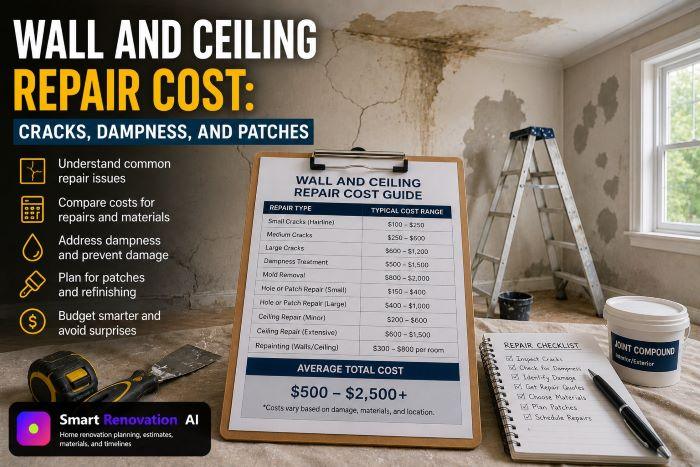
Drywall installation cost is shaped by the surface behind the wall as much as the board itself. Room size, framing, board type, ceiling height, finish level, texture, sanding, corners, openings, access, and paint prep all change the estimate.
A useful drywall quote should say whether the job is new installation, patch repair, ceiling replacement, moisture-resistant board, fire-rated board, sound-control work, or finish preparation after another trade has opened the wall.
Drywall Work Has Stages
Drywall is not finished when sheets are screwed to the wall. The full job may include site protection, board delivery, hanging, fastening, corner bead, tape, joint compound, sanding, texture, cleanup, primer, and paint-ready inspection. If a quote only says “install drywall,” ask which stages are included.
| Stage | What it covers | Cost clue |
|---|---|---|
| Framing check | Stud spacing, damaged framing, blocking, ceiling support. | Uneven framing can slow finishing. |
| Board selection | Standard, moisture-resistant, fire-rated, sound-control, ceiling board. | Board type changes material cost. |
| Hanging | Sheet layout, cutting, fastening, openings, ceilings. | High ceilings and tight rooms add labor. |
| Finishing | Tape, mud coats, corners, sanding, texture. | Smooth walls need more care than hidden areas. |
| Closeout | Dust cleanup, primer readiness, touch-ups. | Cleanup matters because drywall dust spreads. |
Finish Level Changes The Quote
A garage wall that will be hidden by shelving does not need the same finish as a living room wall with bright side light. Higher finish levels require more coats, sanding, inspection, and touch-up. If the wall will receive glossy paint, strong lighting, or a smooth modern finish, ask for a higher finish standard in writing.
Board Type Should Match The Room
Bathrooms, laundry rooms, basements, garages, furnace rooms, and shared walls may require different board choices. Moisture-resistant board, fire-rated board, mold-resistant board, or sound-control assemblies should be specified when the room requires them. The cheapest board is not always the correct board.
Texture Matching Is A Separate Skill
Ceiling and wall repairs often fail visually because the texture does not match. Orange peel, knockdown, smooth finish, popcorn removal, skip trowel, and old hand-applied textures can all price differently. A good repair quote explains whether matching is included and how visible the patch may remain.
Repair Versus New Installation
A small patch may need cutting, backing, taping, compound, sanding, texture, primer, and paint blending. A new room may need full sheets, corner beads, long seams, ceilings, and more cleanup. Do not compare patch pricing to new-wall pricing without separating the scope.
If the drywall damage came from water, first read the ceiling water damage repair guide. The leak source should be handled before the wall is closed again.
What Photos To Upload
- Wide photo of the full wall or ceiling.
- Close-up of holes, cracks, stains, or missing board.
- Visible framing or open wall cavities.
- Room corners, outlets, windows, doors, and trim.
- Existing texture and light direction.
- Ceiling height and access obstacles.
What Should Not Be Added Automatically
Drywall installation should not automatically include cabinets, flooring, plumbing, electrical, or roofing unless the customer asks for them or the wall opening clearly involves those trades. The nearby supplier list should stay focused on drywall suppliers, gypsum board, joint compound, tape, corner bead, primer, paint suppliers, and drywall contractors.
Quote Questions
Ask whether demolition, disposal, board type, finish level, texture, sanding, dust control, primer, paint, trim removal, outlet cutouts, ceiling work, and cleanup are included. If multiple rooms are involved, ask for each room to be listed separately.
Ceilings Need Separate Attention
Drywall ceilings can cost more than walls because the work is overhead and often requires lifts, extra hands, careful fastening, and more protection. Ceiling height, attic access, insulation, light fixtures, fans, vents, and texture matching can all change the estimate. A sagging ceiling should be inspected before anyone simply covers it with new board.
Open Wall Work After Other Trades
Drywall is often the final step after plumbing, electrical, HVAC, window, roof, or leak repair work. The estimate should say whether the wall cavity is already ready to close. If wiring, pipes, framing, insulation, or moisture problems still need attention, drywall should wait until those items are approved.
Dust Control And Cleanup
Drywall sanding dust can travel into vents, closets, furniture, and electronics. Ask how the contractor protects the work area, whether plastic barriers are used, whether dust-control sanding is available, and who performs final cleanup. This can matter as much as the patch itself in occupied homes.
When To Ask For A Higher Finish
Ask for a higher finish where sunlight hits the wall sideways, where dark or glossy paint will be used, where cabinets or mirrors sit against the wall, or where the room has a premium finish expectation. A basic finish can be acceptable in a utility space, but it may look rough in a main living area.
Also ask who is responsible for primer. Fresh drywall can absorb paint unevenly, so primer is often needed before the final color. If primer is excluded, the painting quote should account for it.
Keep photos of open framing and finished walls together so future repairs are easier to understand.
FAQs
What affects drywall installation cost?
Area, board type, framing condition, ceiling height, access, finish level, texture, taping, sanding, repairs, and paint prep affect cost.
What is drywall finish level?
Finish level describes how smooth and paint-ready the surface becomes, from basic concealed areas to high-finish walls under strong light.
Is drywall repair priced the same as new drywall?
No. Small repairs may involve patching and texture matching, while new installation includes hanging, taping, mudding, sanding, and finishing.
Should drywall installation include painting?
Only if it is listed. Drywall finishing and painting are often separate scope lines.
What photos help estimate drywall work?
Show the full wall or ceiling, framing, damage, corners, seams, water stains, texture, outlets, and room size.